Latest News & Updates
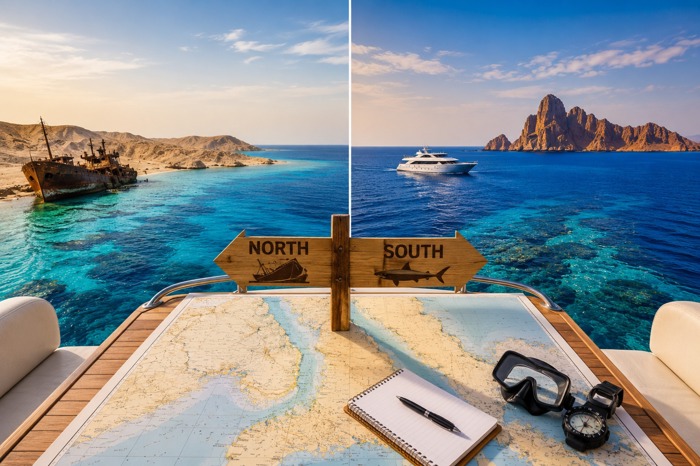
Diving areas - northern route or southern route?
Northern Route or Southern Route – Which Red Sea Liveaboard Is Right for You?
A Red Sea liveaboard is on the bucket list of many divers. But when planning your trip, one important question quickly arises: Should you choose the Northern Route or the Southern Route?
Both regions offer spectacular diving, but they differ significantly in terms of underwater landscapes, currents, marine life, and difficulty level. The best itinerary for you depends on your experience, diving goals, and personal preferences.
In this guide, we'll compare the two most popular liveaboard regions in the Red Sea and help you decide which one suits you best.
The Northern Route – Wrecks and Legendary Reefs
The Northern Route is one of Egypt's most popular liveaboard itineraries and is ideal for divers who want to experience a combination of colorful coral reefs and historic shipwrecks.
Some of the most famous dive sites include:
SS Thistlegorm
Abu Nuhas
Ras Mohammed National Park
Strait of Tiran
What to Expect
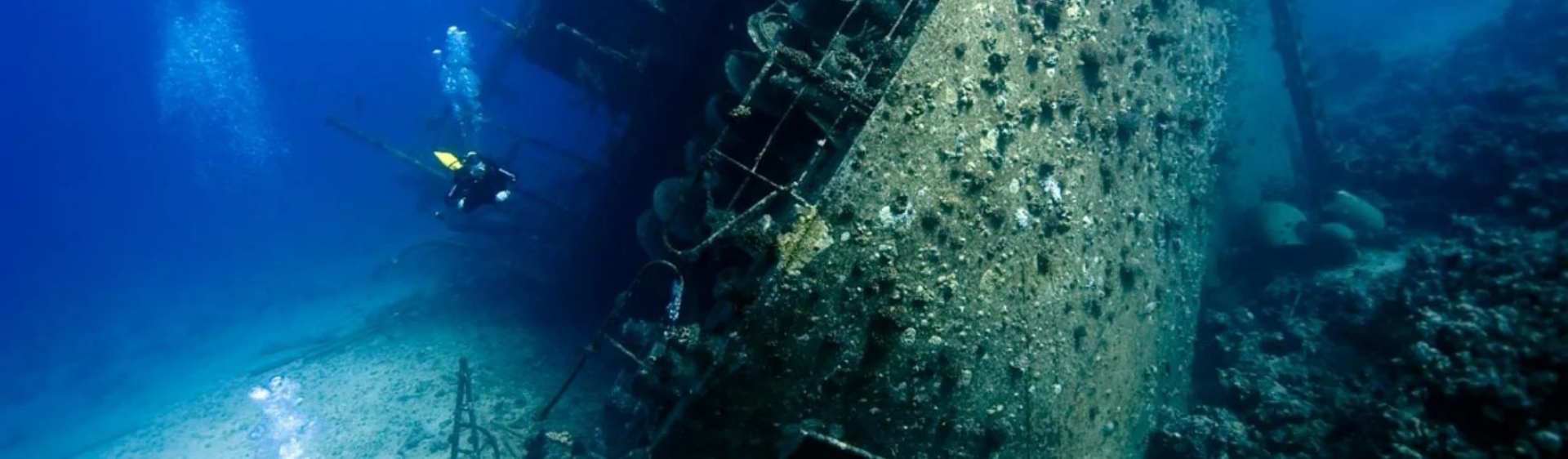
World-famous wreck dives
Vibrant coral reefs
Large schools of fish
Generally moderate currents
Shorter travel distances between dive sites
Wreck enthusiasts especially love this route. The SS Thistlegorm is widely regarded as one of the best wreck dives in the world and is often the highlight of the trip.
Who Is the Northern Route Best For?
First-time liveaboard guests
Wreck diving enthusiasts
Underwater photographers
Intermediate divers
Groups with mixed experience levels
Because many dive sites are relatively sheltered, conditions are often more comfortable than on some of the offshore reefs in the south.
The Southern Route – Adventure and Big Marine Life
The Southern Route takes divers to Egypt's remote southern reefs, where some of the Red Sea's most spectacular underwater landscapes can be found. It also offers a higher chance of encounters with pelagic species.
Depending on the itinerary, destinations may include:
Brothers Islands
Daedalus Reef
Elphinstone Reef
St. John's
Fury Shoals
What to Expect in the South
Dramatic wall dives
Healthy, pristine coral reefs
Shark encounters (seasonal)
Less crowded dive sites
More challenging drift dives and currents
Many of these reefs are located far offshore and can only be reached by liveaboard.
Who Is the Southern Route Best For?
Experienced divers
Shark enthusiasts
Divers comfortable with currents
Returning visitors to the Red Sea
Photographers seeking untouched reefs
If you've always dreamed of seeing hammerhead sharks, oceanic whitetips, or huge schools of fish, the southern Red Sea offers some of the best opportunities—depending on the season and weather conditions.
Northern Route vs Southern Route – A Direct Comparison
| Northern Route | Southern Route |
|---|---|
| Famous wreck dives | Spectacular offshore reefs |
| Suitable for beginners and advanced divers | Better suited for experienced divers |
| Generally moderate currents | Often stronger currents |
| Shorter travel distances | Longer crossings between reefs |
| Many sheltered dive sites | More exposed open-ocean conditions |
| Perfect for wreck lovers | Perfect for shark and pelagic enthusiasts |
Which Route Has the Best Coral Reefs?
Divers looking for the healthiest and most pristine coral reefs often prefer the Southern Route. Areas such as St. John's and Fury Shoals are famous for their vast hard coral gardens, colorful soft corals, and impressive biodiversity.
The Northern Route also offers beautiful reefs, particularly around Ras Mohammed and the Strait of Tiran, but here the focus is often on the combination of reef and wreck diving.
Which Route Is Better for a First Liveaboard?
For many divers, the Northern Route is the ideal introduction to liveaboard diving.
Conditions are generally easier, travel distances are shorter, and the mix of wrecks and reefs provides plenty of variety. It's a fantastic way to experience everything that makes Red Sea liveaboards so special.
Divers who have already completed several liveaboards and are looking for a new challenge often prefer the Southern Route, where dramatic walls, remote reefs, and exciting pelagic encounters await.
Final Thoughts
There is no single "best" route—both regions offer unforgettable diving experiences.
The Northern Route is famous for its legendary wrecks, relaxed diving conditions, and diverse reef systems. It is the perfect choice for beginners, wreck enthusiasts, and anyone planning their first Red Sea liveaboard.
The Southern Route, on the other hand, offers spectacular offshore reefs, pristine coral landscapes, and the chance to encounter sharks and other free-floating species. It is particularly appealing to experienced divers seeking adventure and world-class reef diving.
Whichever route you choose, a Red Sea liveaboard promises incredible underwater scenery, unforgettable marine encounters, and some of the best diving experiences on the planet.


