Daedalus-St. Johns

Daedalus-St. Johns

Itinerary Highlights

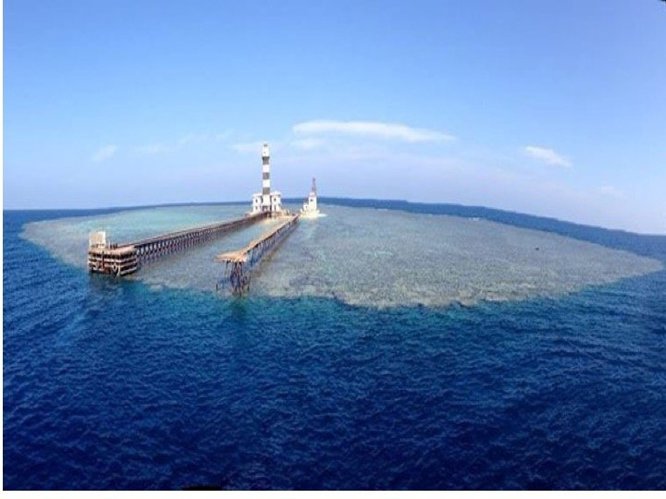
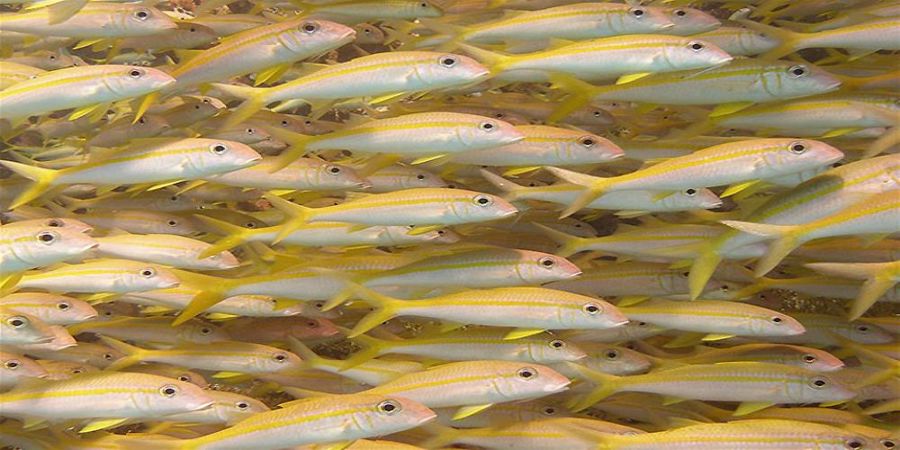
  • The Daedalus reef is a huge reef formation that lies at about 180 km south of Brother Islands. The reef is surrounded by a sheer wall all around, featuring a plateau on its southern side that goes from 28 m beside the reef to 40 m on the edge of the drop off. If the weather is good, try to get as far north as possible and drift along one of the sides of the reef. Reef and hammerhead sharks are often spotted here. The marine life is here more abundant than anywhere else, with schools of surgeons, fusiliers.
  • In the deep south of the Red Sea we find the St. Johns reefs. Big Habili and Small Habili with their fantastic drop offs overgrown with big gorginias and colorful bright soft corals promise you to be a fantastic dive. You find a lot of marine life at the reef itself and as well in the blue you may see barracudas, different sharks, sometimes dolphins or manta passing by. Umm Erug seems to be the place of unusual coral blocks. Next to the main reef in a depth of 12 m to 30 m you find many different block formations who remind you of everyday life`s figures. Schools of small reef fishes, camouflage artists and small critters you can explore. Around two hours drive to the north there is the area of St. Johns Cave. The name cave is program and Umm Hararim impresses of its unique cave and canyon system. The main reef surrounded by a beautiful hard coral garden is on its south-west side full of holes like a Swiss cheese. In shallow water you can dive through the open passages to see the light show of the sun and the nice soft corals growing inside.
  • Daedalus Reef

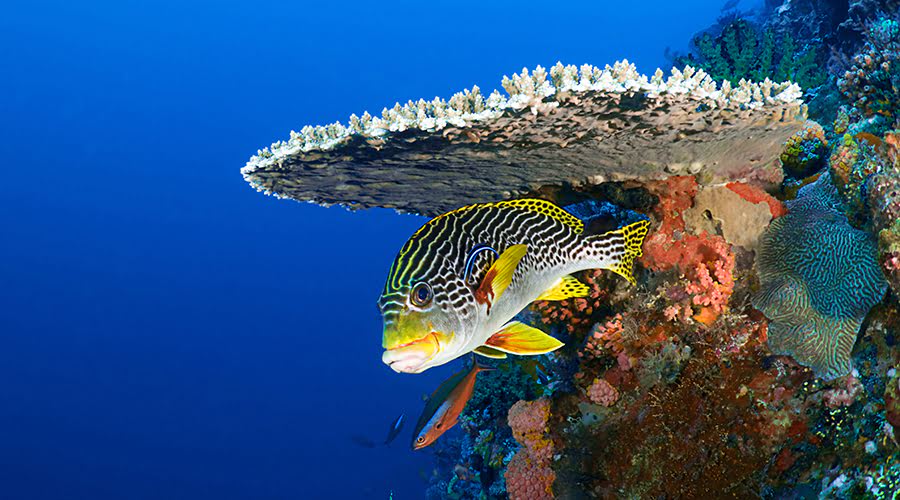
    Daedalus Reef is surrounded by a steep wall and features a plateau on the south side, which drops from 30 m at the wall to 40 m at the edge. The plateau is covered in colorful vegetation right down to the shallow area; turtles like to hang out there, as well as plenty of schooling fish. A closer look is worthwhile to spot snails, scorpionfish, and stonefish. It's not uncommon for a thresher shark to stop by the plateau. At the northwest tip, there's a good chance of encountering hammerhead sharks, but reef sharks of all kinds can also be observed. Drifting along the west side, you'll come across Anemon City: a colony of anemones has settled about 10 m wide and at a depth of 5 m to 30 m, forming a giant flokati carpet in the current. The fish population is impressive: schools of fusiliers, surgeonfish, and jacks, more diverse and abundant than anywhere else.

  • Elphinstone

    This long finger like reef runs from north to south in the open Red Sea. Steep walls drop to the depths on the reef’s east and west sides, while the north and south ends of the reefs are marked by submerged plateau. Sharks often swim by the spot to feed on the abundant reef fish population.

  • Shaab Shona

    The lagoon is formed from a dried up river (wadi) and with a diameter of 150m between 5 and 45m deep. You can still see the wadi in the middle as a channel that rises to the north and south. In the north there is a plateau whose edges drop from 14 to over 40m. The north side is characterized by boulders where you can find ghost pipefish, long-jawed makerels, glassfish and crocodile fish, but of course also as many different coral species. They reach from the reef edge partly down to 20m and are covered with life.

  • Dangarous Reef

    This is the southernmost reef of St. John's and offers plenty of variety. The reef has an extension of 150m by 70m. Hidden on the main reef is the small cave system. It is easy to dive and there is no danger of getting lost. The entrance is located on a small plateau at 9m depth. In the outer area, the plateau extends another 60m to the south. Here there are carpet anemones and harlequin crabs that live together symbiotically. At another spot lives a hammerhead shark. To the west, numerous coral structures rise from a mixture of soft and hard corals. In between them, giant moray eels and napoleon wrasse are always hiding. Two ergs reach from 20m depth to 9m below the surface. Towards the east there is a very nice garden of mountain corals in all colors. Due to the turbulence at the Ergs it is a challenging dive site in stronger currents. Also, the morning current can push you into the open water.

  • Habili Ali

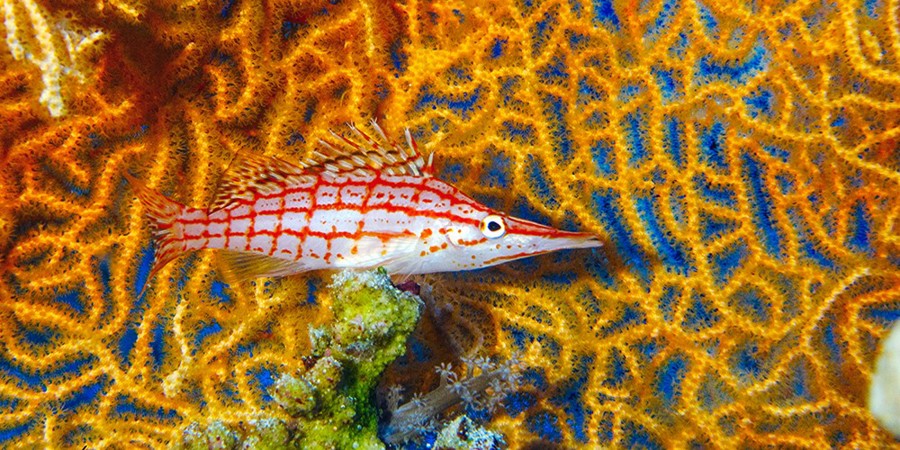
    This reef is the most northeastern of the central area of St.John's. It is a steep wall reef that lies between 0 and 4m under water, depending on the season. The reef edge is riddled with grooves, notches and overhangs everywhere. Everywhere you can see beautiful and abundant growth of soft and hard corals as well as very large gorgonians and black corals. Besides the big fan corals you can surely see the favorite of all divers, the longnose hawkfish. In width Habili Ali measures 20 to 25m from north to south, in length from east to west 150 to 200m. In the south it slopes 10 to 15m and then turns into a narrow plateau. The east and west sides drop well over 40m. Unfortunately, the reef can not always be approached, because the reef top is so close to the water that even with a small outer wave quite decent breakers can form. Since Habili Ali is an outer reef, the current can be from weak to very strong and come from all directions. A current test is therefore essential.

  • St.Johns Gota Soraya

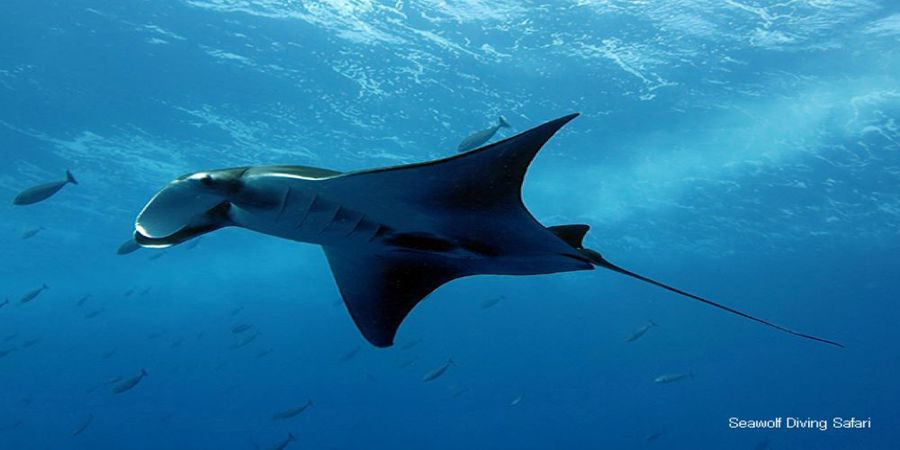
    The reef reaches well over 100m in depth and has a chimney in the south at 9m water depth, which is covered with black coral.<br/>The west side is a wall with deep notches and bulges. There you will find a block that seems to have grown out of the reef, reaching from 22m to 9m below the surface. In the depth a few gray reef sharks pass by from time to time. In the north, St. John`s Gota Soraya has a reef spur after a steep wall of 15m, which runs down with a slope well over 70m. It is covered all over with gorgonians and delicate sea whips as well as huge soft coral fields. Gray-black snappers and reef sharks are common there. On the east side you will find schools of snappers and barbels in the wide niches. Often you also get a manta ray visit, because there the current meets the reef.

  • St. Johns Gota Kebir

    St. John`s Gota Kebir is 250m long and 120m wide. The north ends in a drop-off that drops to 35m in places and opens into a small ledge before plunging further into the depths. The west side drops to 20 to 25m with overhangs and deep notches, then with a slight slope into the outer area where it disappears into the depths. On the east, the wall drops 20 to 30m and then turns into an overhang. The northern part falls directly into the depth. On the way there are huge gorgonians with a diameter of 3 to 4m. The southern side is covered with coral fields. The reef wall there runs vertically down to the second plateau at 55m depth. On the plateau you can watch manta rays, gray reef sharks and hammerhead sharks as they make their moves. On the west and east side, behind the plateau at 9m, there are caves. Both run almost identically in an exciting large diameter circular path. However, please watch out for things that can fall down due to your exhaled air.

Golden Dolphin Safari World

English Deutsch 中文(简体)
up