Brother Islands-Daedalus-Elphinstone

Brother Islands-Daedalus-Elphinstone

Itinerary Highlights

  • This challenging liveaboard takes you to the Brother Islands, Daedalus, Elphinstone Reef and, depending on the itinerary, to some offshore dive sites around Port Ghalib such as Shaab Abu Dabab.
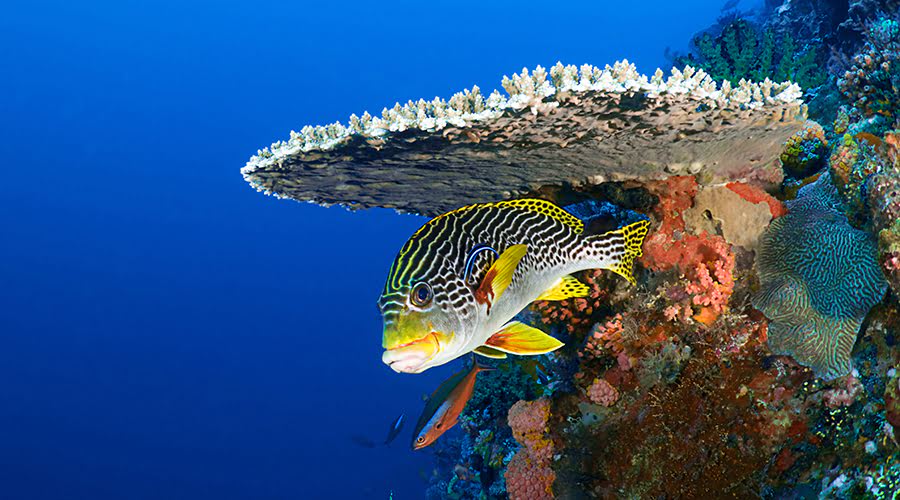
  • The "Brothers" are among the absolute top spots in the world! Big Brother thrills with spectacular drop-offs, huge gorgonian fans, soft corals and an indescribable abundance of fish.
  • The "Aida" and "Numidia" offer unique diving experiences for wreck fans. For "experts", Little Brother is the even better place despite all the superlatives: immense overhangs, fields of soft and hard corals, turtles, tunas and schools of mackerel are part of everyday diving.
  • Big fish like thresher sharks, hammerheads, capital "greys", whitetips and blacktips congregate here early in the morning and dusk with countless other species of deep-sea fish.
  • The drop-offs down to 500 metres around Daedalus Island, offer great drift dives with the right current.
  • Elphinstone Reef, which rises from the depths like a camel's hump, with its beautifully overgrown reef tops, drop-offs and resident sharks, is always great to dive.
  • Brother Islands

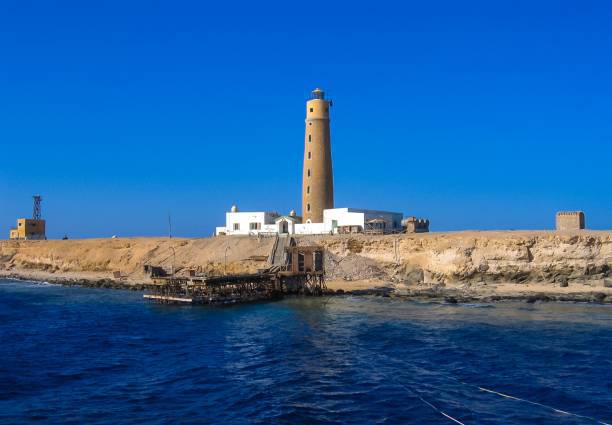
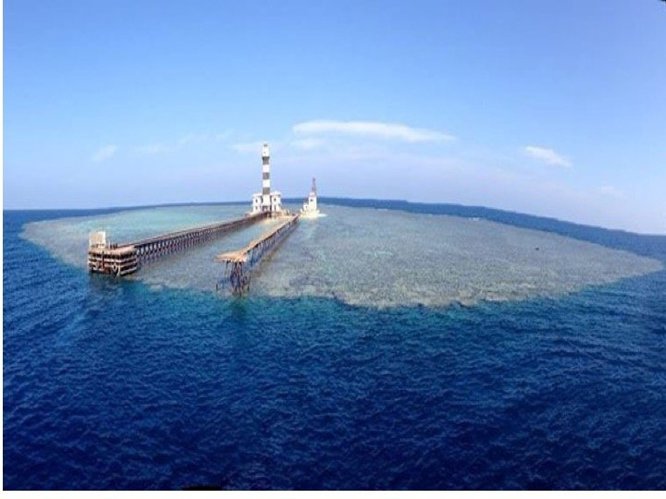
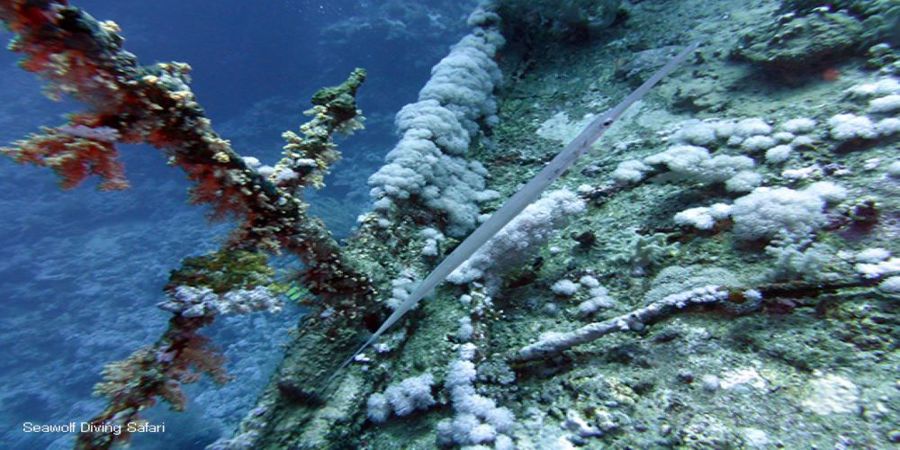
    The Brother Islands one of the best diving spots in the world. The Islands – the Big Brother and the Little Brother – are two small exposed promontories that just come out of the water in the middle of the sea at around 60 km from the Egyptian coast line. The Little Brother has a very high concentration of life in a much reduced area. The walls are covered literally with sponges, anemones and all sorts of hard and soft corals in an astonishing variety of colors and shapes. Of course you will find here plenty of fish. It is not unusual to see sharks: hammerheads, thresher sharks, grey reef sharks, silvertip and whitetip reef sharks. About one km north of the Little Brother lays the Big Brother. Situated, in the middle of the island, is a lighthouse. When it is not too windy, you can proceed to dive the Wreck Numidia which lies upon the reef on the northern side of the island between 5 m and 80 m. This 150 m long ship sunk in 1901 and is now completely covered with both hard and soft corals and gorgonias. At the NW side of the island you will find the other Wreck: the AIDA. This 82 m long steam ship sunk 1957. The remaining pieces of the Wreck are scattered all over the reef and just the back side of the hull can be found between 34 m and 60 m. It is nicely overgrown and worth to visit. Because of strong current and may be high waves it is not easy to dive at the Brother’s. This safari is only for experienced divers.

  • Daedalus Reef

    Daedalus Reef is surrounded by a steep wall and features a plateau on the south side, which drops from 30 m at the wall to 40 m at the edge. The plateau is covered in colorful vegetation right down to the shallow area; turtles like to hang out there, as well as plenty of schooling fish. A closer look is worthwhile to spot snails, scorpionfish, and stonefish. It's not uncommon for a thresher shark to stop by the plateau. At the northwest tip, there's a good chance of encountering hammerhead sharks, but reef sharks of all kinds can also be observed. Drifting along the west side, you'll come across Anemon City: a colony of anemones has settled about 10 m wide and at a depth of 5 m to 30 m, forming a giant flokati carpet in the current. The fish population is impressive: schools of fusiliers, surgeonfish, and jacks, more diverse and abundant than anywhere else.

  • Elphinstone

    This long finger like reef runs from north to south in the open Red Sea. Steep walls drop to the depths on the reef’s east and west sides, while the north and south ends of the reefs are marked by submerged plateau. Sharks often swim by the spot to feed on the abundant reef fish population.

  • Numidia

    The Red Sea has a width of 180 km at the Brothers, yet the crew managed to hit this small island - shortly after two o'clock in the morning, Captain Craig was rudely awakened by the violent impact of the ship on the reef at the northern end of the "Big Brother". The "officer on watch", Merwood, had probably fallen asleep at the same time as his boss. The resulting course then led the ship in truly somnambulistic safety right into the middle of the reef. The ship was thus stuck in and on the narrow fringing reef and all efforts to free itself failed. In the following days, attempts were made to tow the Numidia free with the help of other ships, but this failed. Captain Craig was left with the thankless task of remaining on the desolate island for several more weeks to supervise the salvage of the cargo. Probably in the winter storms of 1901/02, the ship was then torn from the reef and it sank for good.

  • Aida

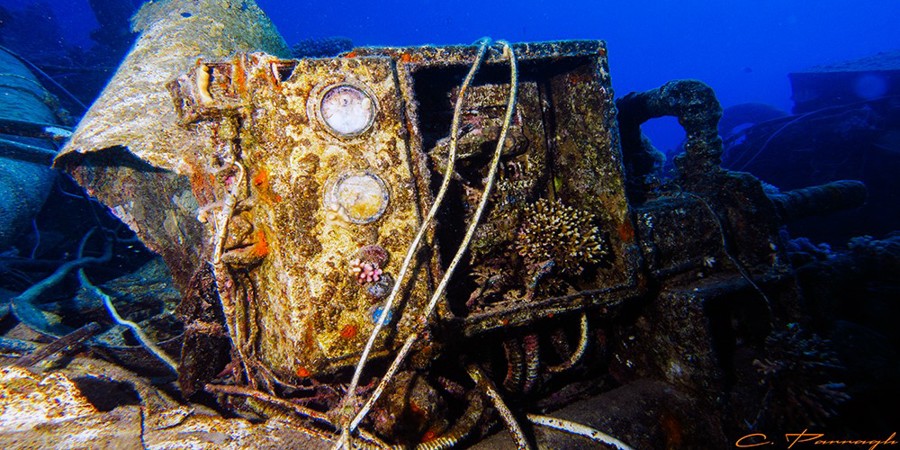
    The dive on the AIDA is an extraordinary dive, no matter how much experience you have as a diver. It leaves you wondering how a ship can sink like that and stand on the sloping reef edge, as if parked. Since the ship no longer contains any cargo, one suspects that this has slipped through the wreck and now lies in deeper regions on the ground. Same as, the AIDA stands bolt upright on the sloping reef edge, the highest point at 25 m, the screw at 57 m. Apart from the collision with the reef, the ship is still completely intact. It has been there for more than 40 years now and is becoming more and more part of the reef, overgrown with corals.

  • Shaab Shona

    The lagoon is formed from a dried up river (wadi) and with a diameter of 150m between 5 and 45m deep. You can still see the wadi in the middle as a channel that rises to the north and south. In the north there is a plateau whose edges drop from 14 to over 40m. The north side is characterized by boulders where you can find ghost pipefish, long-jawed makerels, glassfish and crocodile fish, but of course also as many different coral species. They reach from the reef edge partly down to 20m and are covered with life.

Golden Dolphin Safari World

English Deutsch 中文(简体)
up