St.Johns-Abu Fendera

St.Johns-Abu Fendera

Itinerary Highlights

  • The diverse reefs of the St. John's group are located far to the south, behind Port Berenice and belong to the largest reef plateau north of Port Sudan.
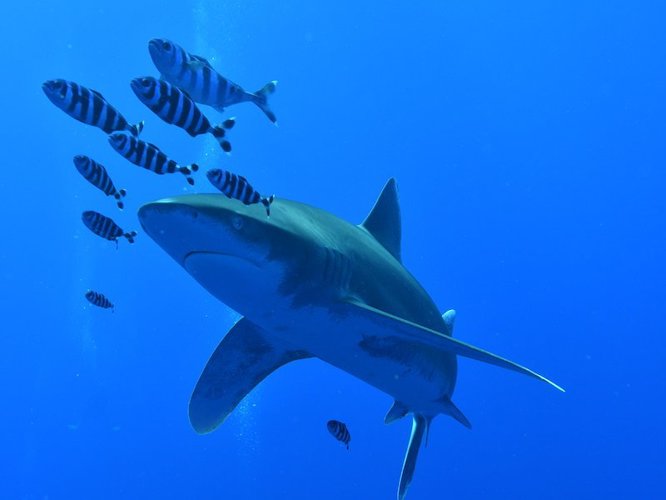
  • The spectacular underwater life here is well worth the long journey. The reef walls are bursting with life: Huge fan and soft corals, caves and overhangs are just as much a part of it as the humphead parrotfish, which is found in the northern Red Sea and can grow up to 1.80 meters long! Up to eight different shark species such as thresher sharks, schools of hammerheads, tiger sharks and even oceanic white tip are regularly encountered here. Wonderfully overgrown reef tops with lots of "small stuff" provide a change to the spectacular "blue water dives"!
  • Abu Fendera area is located near the border of Egypt with Sudan. The main reef is about 6 km long. Explorers will find a huge area with beautiful coral landscape. The attraction of this reef is, among other things, its lonely location - sometimes you will not meet another boat for several days.
  • The main reef cannot be called spectacular. However, the "passage" between the reefs is a gem. In front of the reef there are numerous coral blocks, overgrown by beautiful soft corals. At these dive sites you can very often meet humphead wrasse in all sizes. Very impressive are also large schools of bumphead parrotfish and the sighting of a sailfish can take your breath away.
  • Abu Fendera

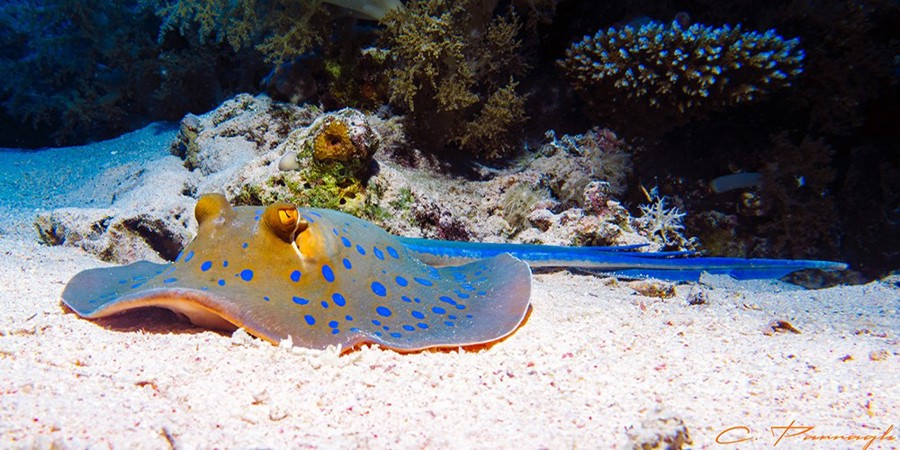
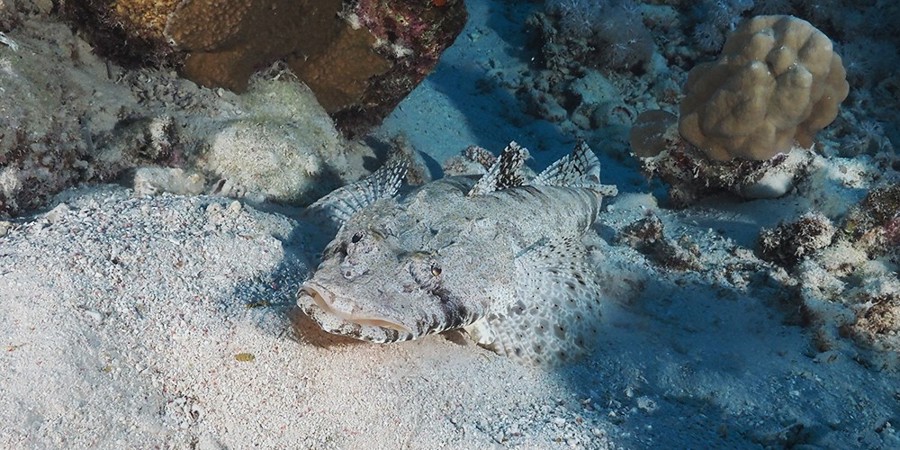
    The boat moors in the lagoon. You let the zodiac take you through the channel and drop you off at the ergs (coral blocks). With the reef on your right shoulder, you head towards the channel, where a few meters from the entrance, at a depth of 15-20 meters, you will find a series of blocks beautifully covered with stony corals. An exceptionally beautiful coral landscape has also developed in the opening and in the channel. The towers are completely covered with soft corals in all colors. Here you should take the time to look for nudibranchs. Time flies here and you don't know where to look first. Towards the end of the dive you cross the channel towards the boat and can ascend comfortably in the shallow area. Around the Ergs you can find batfish, boxfish, crocodile fish and blue spotted rays camouflage themselves in the sandy bottom.

  • Dangarous Reef

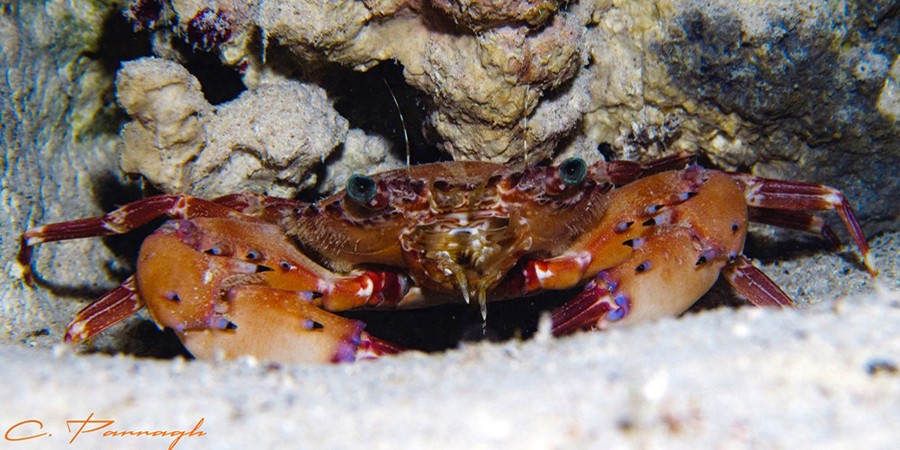
    This is the southernmost reef of St. John's and offers plenty of variety. The reef has an extension of 150m by 70m. Hidden on the main reef is the small cave system. It is easy to dive and there is no danger of getting lost. The entrance is located on a small plateau at 9m depth. In the outer area, the plateau extends another 60m to the south. Here there are carpet anemones and harlequin crabs that live together symbiotically. At another spot lives a hammerhead shark. To the west, numerous coral structures rise from a mixture of soft and hard corals. In between them, giant moray eels and napoleon wrasse are always hiding. Two ergs reach from 20m depth to 9m below the surface. Towards the east there is a very nice garden of mountain corals in all colors. Due to the turbulence at the Ergs it is a challenging dive site in stronger currents. Also, the morning current can push you into the open water.

  • Habili Ali

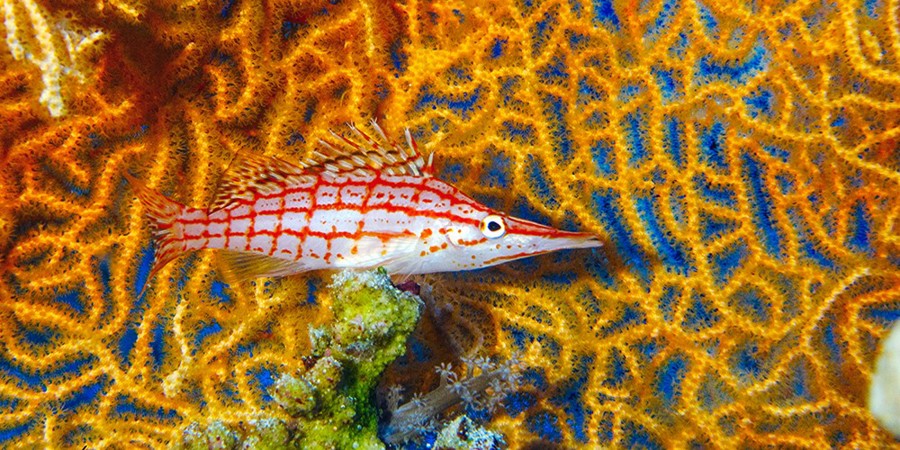
    This reef is the most northeastern of the central area of St.John's. It is a steep wall reef that lies between 0 and 4m under water, depending on the season. The reef edge is riddled with grooves, notches and overhangs everywhere. Everywhere you can see beautiful and abundant growth of soft and hard corals as well as very large gorgonians and black corals. Besides the big fan corals you can surely see the favorite of all divers, the longnose hawkfish. In width Habili Ali measures 20 to 25m from north to south, in length from east to west 150 to 200m. In the south it slopes 10 to 15m and then turns into a narrow plateau. The east and west sides drop well over 40m. Unfortunately, the reef can not always be approached, because the reef top is so close to the water that even with a small outer wave quite decent breakers can form. Since Habili Ali is an outer reef, the current can be from weak to very strong and come from all directions. A current test is therefore essential.

  • St.Johns Gota Soraya

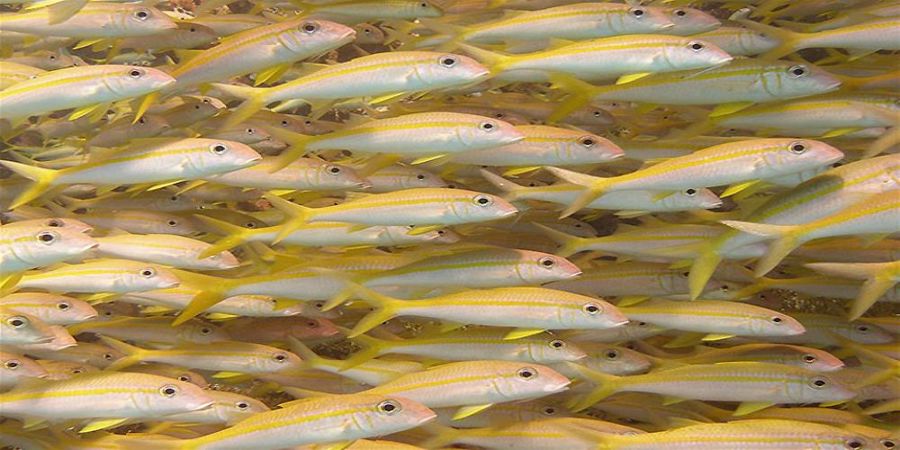
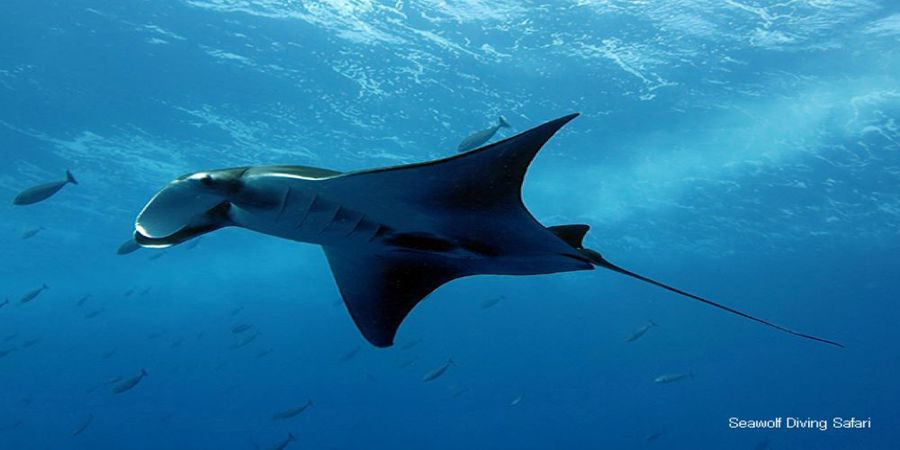
    The reef reaches well over 100m in depth and has a chimney in the south at 9m water depth, which is covered with black coral.<br/>The west side is a wall with deep notches and bulges. There you will find a block that seems to have grown out of the reef, reaching from 22m to 9m below the surface. In the depth a few gray reef sharks pass by from time to time. In the north, St. John`s Gota Soraya has a reef spur after a steep wall of 15m, which runs down with a slope well over 70m. It is covered all over with gorgonians and delicate sea whips as well as huge soft coral fields. Gray-black snappers and reef sharks are common there. On the east side you will find schools of snappers and barbels in the wide niches. Often you also get a manta ray visit, because there the current meets the reef.

  • St. Johns Gota Kebir

    St. John`s Gota Kebir is 250m long and 120m wide. The north ends in a drop-off that drops to 35m in places and opens into a small ledge before plunging further into the depths. The west side drops to 20 to 25m with overhangs and deep notches, then with a slight slope into the outer area where it disappears into the depths. On the east, the wall drops 20 to 30m and then turns into an overhang. The northern part falls directly into the depth. On the way there are huge gorgonians with a diameter of 3 to 4m. The southern side is covered with coral fields. The reef wall there runs vertically down to the second plateau at 55m depth. On the plateau you can watch manta rays, gray reef sharks and hammerhead sharks as they make their moves. On the west and east side, behind the plateau at 9m, there are caves. Both run almost identically in an exciting large diameter circular path. However, please watch out for things that can fall down due to your exhaled air.

  • Gota Wahed/Etnien Abu Fendera

    The blocks are not very far apart on a huge plateau, nevertheless you should plan 2 dives in any case. Around the two blocks the mostly sandy bottom is about 18 meters deep. You can be brought out of the lagoon by zodiac and be dropped at different places. At Gota Wahed there are several small coral blocks on the western side in 15 - 20 meters, which are very worth seeing. There you should start the dive. Back at the big block, follow it with the reef on the right shoulder and let the zodiac pick you up again between the two blocks. The second dive starts where the first one left off - between Gota Wahed and Gota Etnien, where there are again small coral blocks that should be examined closely. The dive continues again with the reef on the right side towards the east.

  • Farcha/Habili Abu Fendera

    At the edge of the plateau there is a drop off that goes down to about 50 meters. However, the more interesting section is on the plateau at a depth of about 25 - 30 meters. There you will find numerous coral blocks (ergs) of different sizes. At the end of each "horseshoe" there are 2 groups of three habilis - that's how the ergs are called, which lie under the water surface. Since the two groups are quite far apart, you should plan 2 dives here. You can be dropped with the zodiac above the Ergs and go around the blocks, which are beautifully overgrown.

Golden Dolphin Safari World

English Deutsch 中文(简体)
up