North incl. Rosalie Moller-Brother Islands

North incl. Rosalie Moller-Brother Islands

Itinerary Highlights

  • The SS Thistlegorm is probably the most famous Wreck in the Red Sea.
  • The reef at Abu Nuhas is famous for wrecks. There are 4 Wrecks, which are today an attraction point for divers all around the world. For example the Greek cargo ship Giannis D, which ran aground the reef on 19th April 1984 and sank a short time afterwards.
  • The steamship Carnatic struck the reef in September 1869. She sank the following day as the weather worsened.She lies in about 26 m depths.
  • The Dunraven, a steam and sail-powered vessel used to transport spices and timber, ran aground the reef Sha'ab Mahmoud in April 1876 during a voyage from Bombay to Newcastle and sank quickly.
  • The marine park Ras Mohamed offers dreamlike diving spots. For example Shark and Yolanda Reef. Both reefs are standing on a plateau, which is between 10 m to 20 m deep. The edges of the plateau fall down to more than 200 m. At the reef you will find nice hard and soft corals, plenty of fish in all kind of sizes. With luck you can see sharks during your early morning dive. At Yolanda Reef you can see the cargo of a Cypriot freighter Yolanda which ran aground in 1980: a large quantity of household pottery such as toilets, bath and shower tubes and bidets.
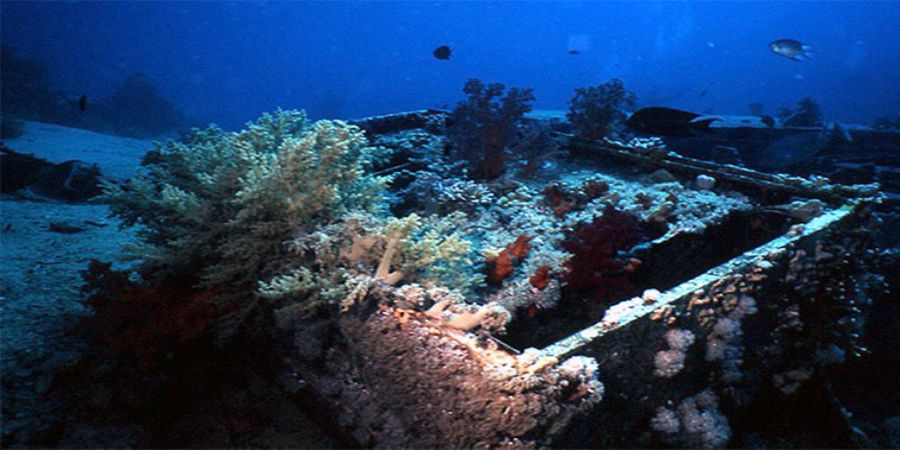
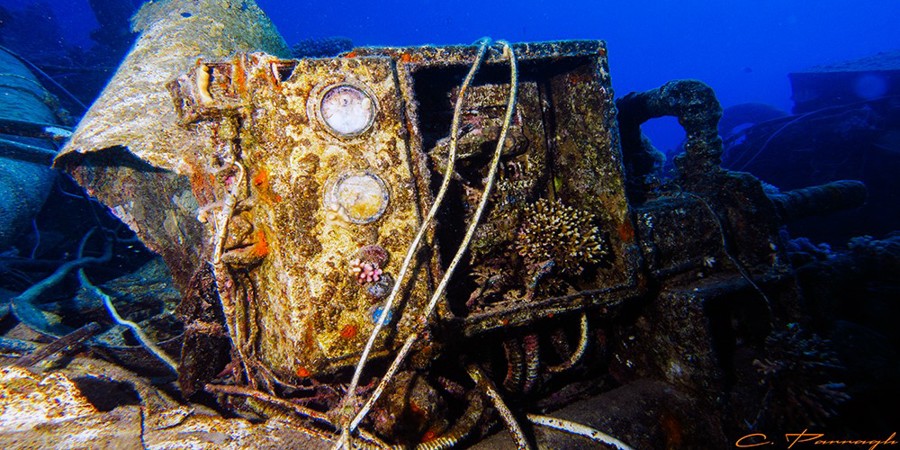
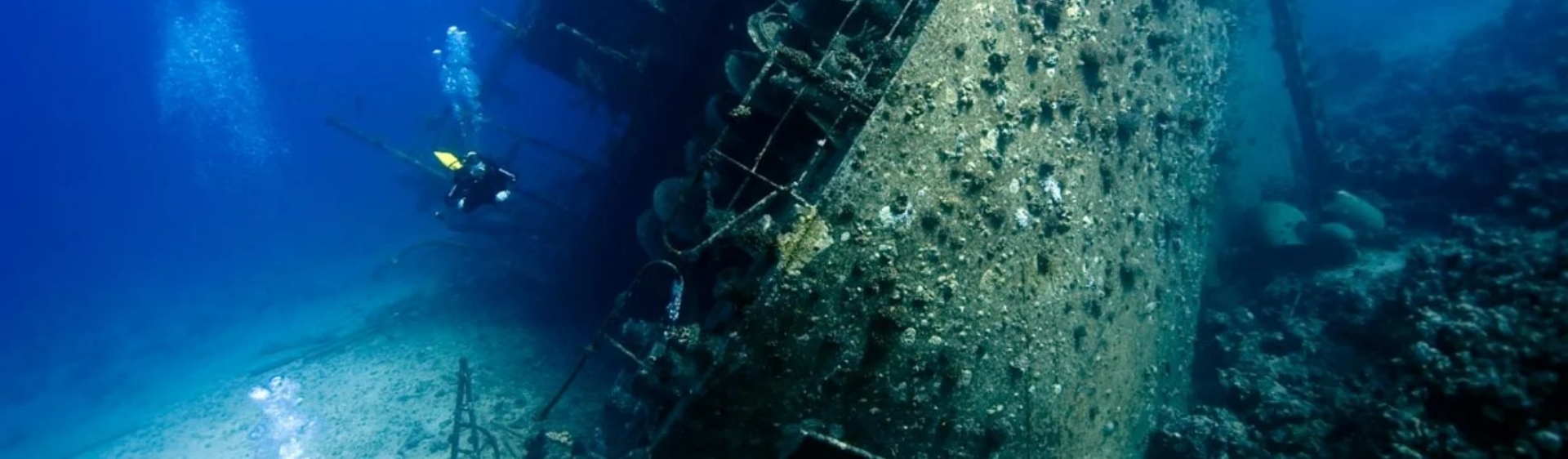
  • Diving the Rosalie Moller: This is a magnificent shipwreck which is virtually intact. She sits upright on the seabed at a maximum depth of 45 - 50 m. Almost everything is still in place including both masts - as far as the crosstrees. The decks are at 39 m.
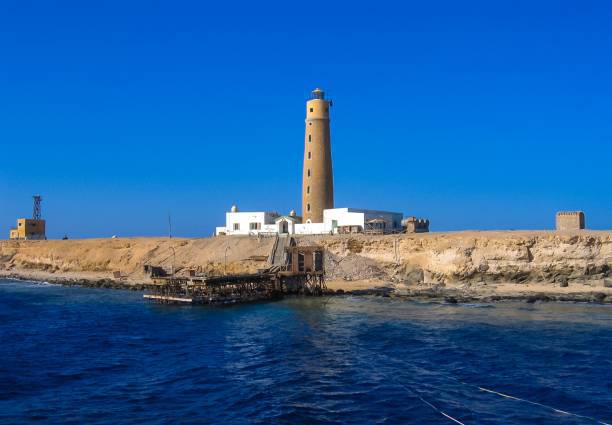
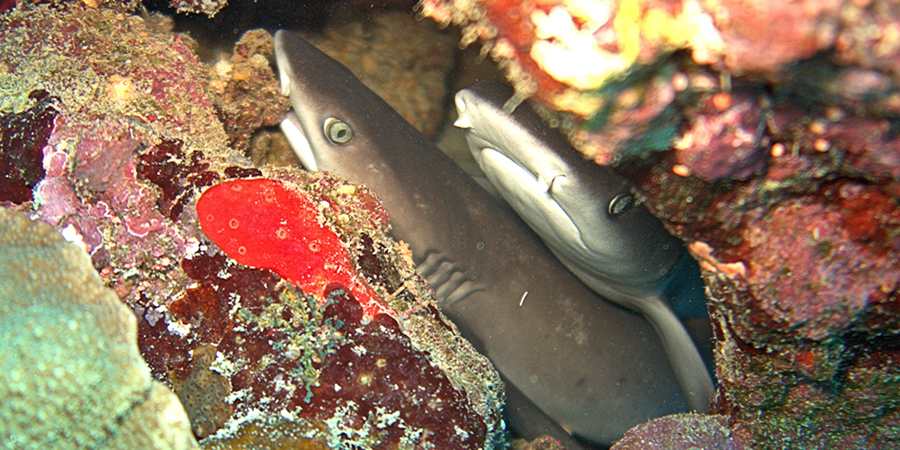
  • The Brother Islands one of the best diving spots in the world. The Islands – the Big Brother and the Little Brother – are two small exposed promontories that just come out of the water in the middle of the sea at around 60 km from the Egyptian coast line. The Little Brother has a very high concentration of life in a much reduced area. The walls are covered literally with sponges, anemones and all sorts of hard and soft corals in an astonishing variety of colors and shapes. Of course you will find here plenty of fish. It is not unusual to see sharks: hammerheads, thresher sharks, grey reef sharks, silver tip and white tip reef sharks. About one km north of the Little Brother lays the Big Brother. Situated, in the middle of the island, is a lighthouse. When it is not too windy, you can proceed to dive the wreck Numida which lies upon the reef on the northern side of the island between 5 m and 80 m. This 150 m long ship sunk in 1901 and is now completely covered with both hard and soft corals and gorgonias. At the NW side of the island you will find the other wreck: the AIDA. This 82 m long steam ship sunk 1957. The remaining pieces of the Wreck are scattered all over the reef and just the back side of the hull can be found between 34 m and 60 m. It is nicely overgrown and worth to visit.
  • Because of strong current and may be high waves it is not easy to dive at the Brother’s. This safari is only for experienced divers!
  • SS Thistlegorm

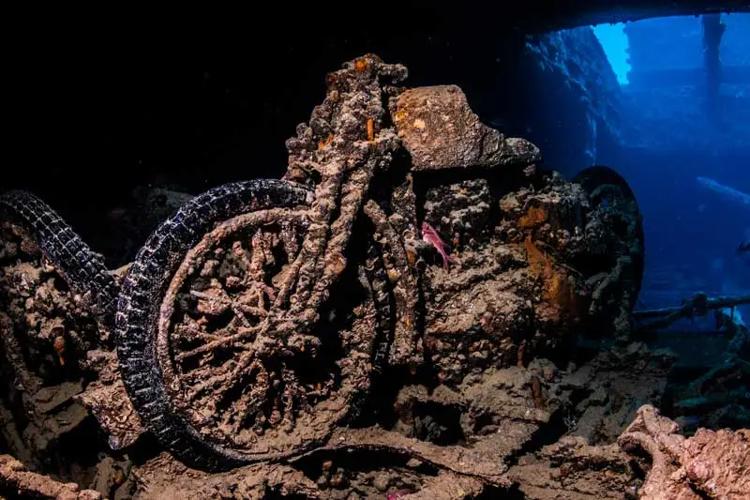
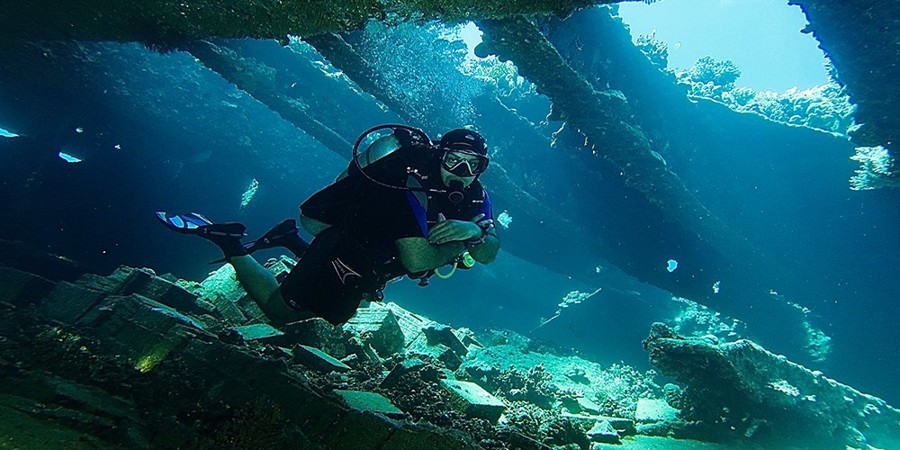
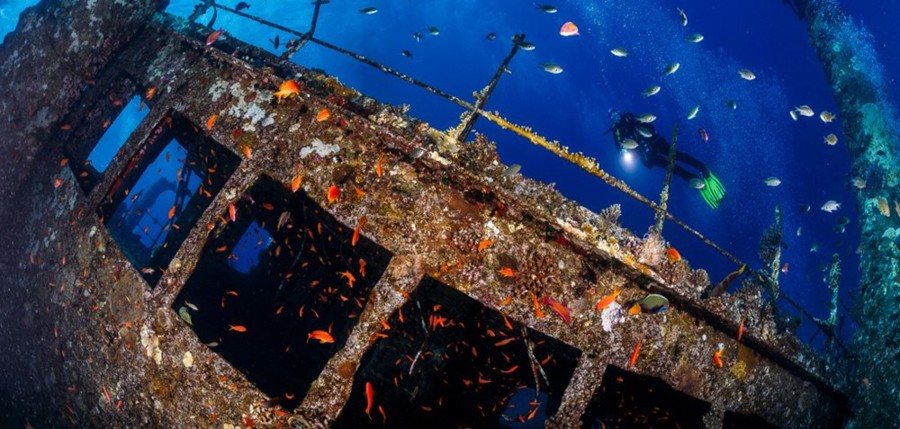
    The English ship was on her way to Egypt to supply the English Africa Corps with supplies when she was attacked by a German bomber on 6.10.1941 and sank. The wreck lies upright on the seabed at a depth of 30 meters. The cargo is especially interesting: tanks, trucks, weapons, motorcycles, railroad cars as well as a locomotive. The Thistlegorm is a must for every Red Sea diver. She is a delight for wreck enthusiasts, not to mention her spectacular cargo. But she also offers a variety of fish. Schools of barracudas or big tunas and snappers are not uncommon here. As an artificial reef, it also attracts countless coral fish.<br/>

  • Brother Islands

    The Brother Islands one of the best diving spots in the world. The Islands – the Big Brother and the Little Brother – are two small exposed promontories that just come out of the water in the middle of the sea at around 60 km from the Egyptian coast line. The Little Brother has a very high concentration of life in a much reduced area. The walls are covered literally with sponges, anemones and all sorts of hard and soft corals in an astonishing variety of colors and shapes. Of course you will find here plenty of fish. It is not unusual to see sharks: hammerheads, thresher sharks, grey reef sharks, silvertip and whitetip reef sharks. About one km north of the Little Brother lays the Big Brother. Situated, in the middle of the island, is a lighthouse. When it is not too windy, you can proceed to dive the Wreck Numidia which lies upon the reef on the northern side of the island between 5 m and 80 m. This 150 m long ship sunk in 1901 and is now completely covered with both hard and soft corals and gorgonias. At the NW side of the island you will find the other Wreck: the AIDA. This 82 m long steam ship sunk 1957. The remaining pieces of the Wreck are scattered all over the reef and just the back side of the hull can be found between 34 m and 60 m. It is nicely overgrown and worth to visit. Because of strong current and may be high waves it is not easy to dive at the Brother’s. This safari is only for experienced divers.

  • Rosalie Moller

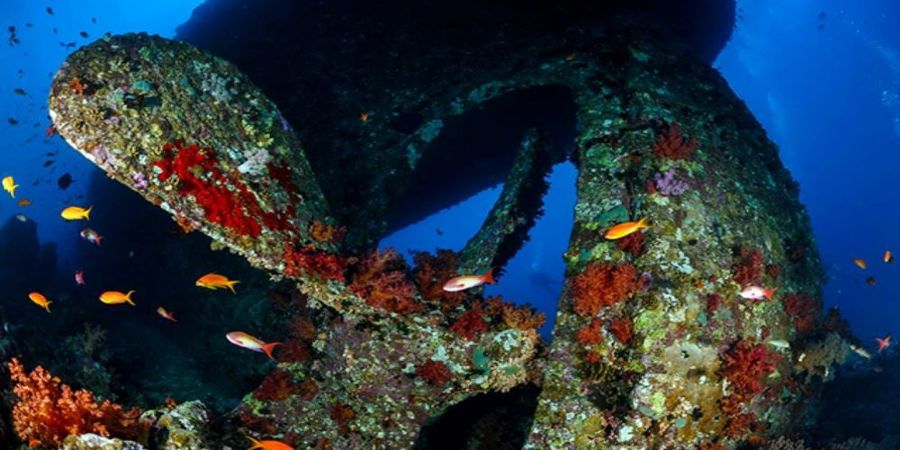
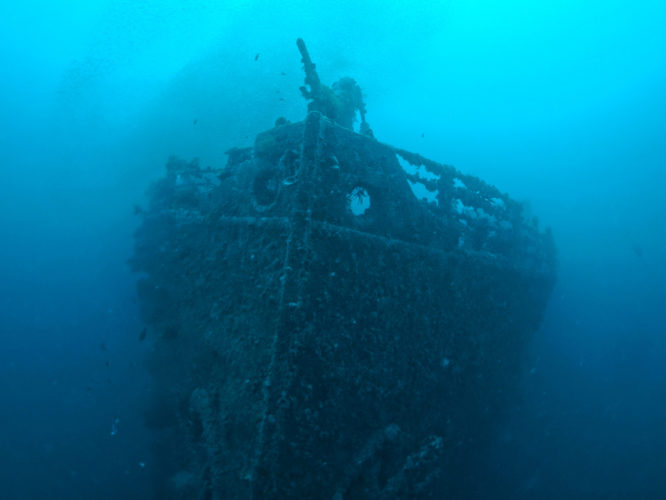
    The Rosalie Moller ran in 1910 under the name "Francis" from the stack. She was sold in 1931, given the name "Rosalie Moller" by the new shipowner and was primarily used as a general cargo ship between Shanghai and Tsingtao until the beginning of the war, and then commuted as a coal freighter between Liverpool and all British war ports from Portsmouth to Gibraltar. In 1941 she received the transfer order for the Red Sea. As with the Thistlegorm, the shorter journey through the Mediterranean Sea, which was dominated by the German and Italian air forces, was rejected and the 12,000 nm long route around Africa was started, reaching the Straits of Gubal in early October 1941 and the Thistlegorm anchored worldwide. Two days after the sinking of the Thistlegorm, on October 8, 1941, the Luftwaffe carried out another air raid on the ships lying at anchor, during which the Rosalie Moller began to sink due to a bomb hit at 00:45 AM, only to rise from the sea surface an hour later disappear . The wreck lies upright at a depth of 50 m, almost due north, the upper deck begins at a depth of approx. 30 m. Due to the depth, the current that is usually present and the difficult navigation, the Rosalie Moller is rarely approached and is only for experienced divers! You can either dive on a regular single tank or with tech-diving equipment for a longer bottom time if you so desire. The Rosalie Moller is the Sister Ship of the World famous, and maybe the best wreck dive in the World, Thistlegorm Shipwreck. The hard and soft coral is covering the hull and makes great underwater pictures opportunities. In addition, this artificial reef attracts an interesting variety of marine life with Barracudas, Tunas, Jacks and Trevallies looking for their next meal. Reef Sharks can also sometimes be spotted. Inside the Rosalie Moller is full of Glass fish, Lion fish and Groupers.
  • Shaab-el-erg

    Shaab el Erg is an extensive reef, in the shape of a horseshoe. This formation is open to the south with a shallow lagoon, which is full of ergs. The whole lagoon can be dived. Very popular are the northern tip, the eastern wall or the southwestern tip - Gota Shaab el Erg.

  • Bluff Point

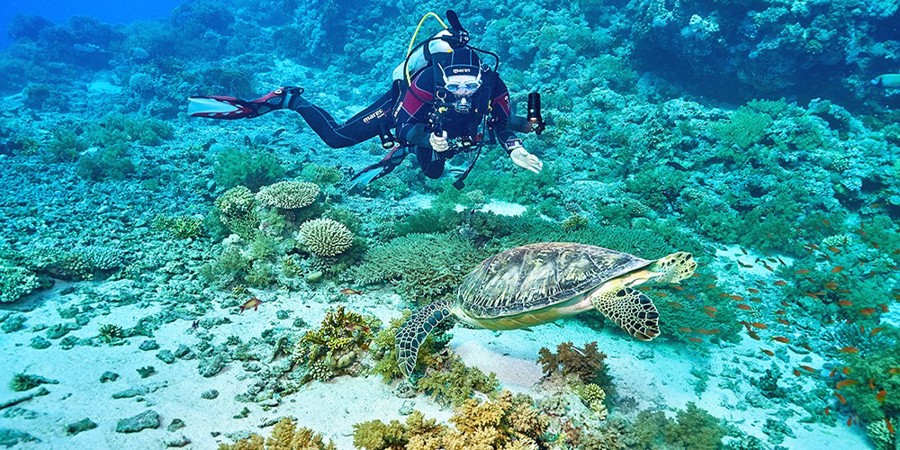
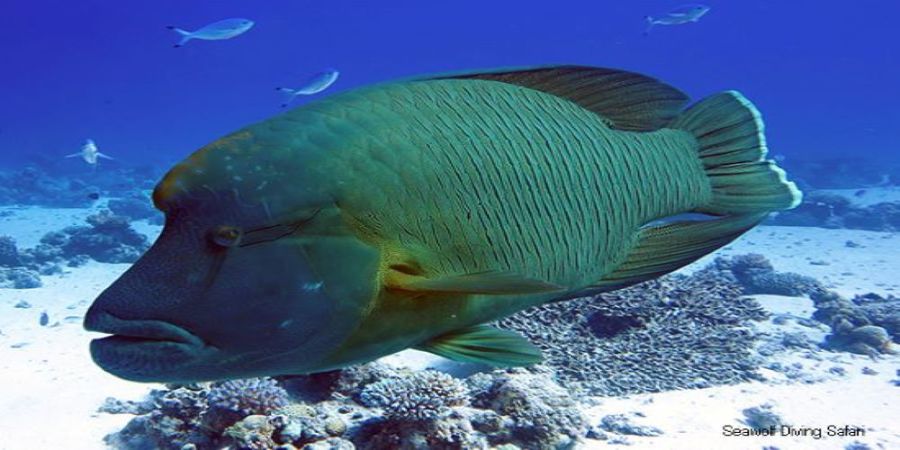
    This dive starts at the northeasternmost point of the tip and then follows the coral wall diving south to the arched bay, the north side of Little Gubal Island. A strong current pushes the diver in a southerly direction, so it is best to stay as close to the wall as possible. Along the rounded tip where the dive begins, large Napoleon wrasse can be encountered and often turtles.

  • Siyoul Kebira

    Sometimes sand valleys (wadis) interrupt the reef, then there are overhangs and crevices to explore. An overabundant growth of corals and countless fish amaze the diver. The dives with a mostly fast current lead to the northern tip.

  • Siyoul Soraya

    It's a fantastic, colorful dive, where you can discover all kind of reef fishes of the Red Sea.

  • Shaab Umm Usk

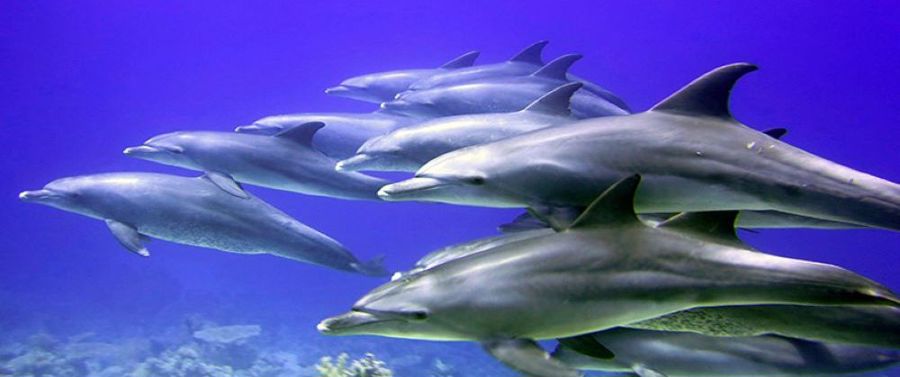
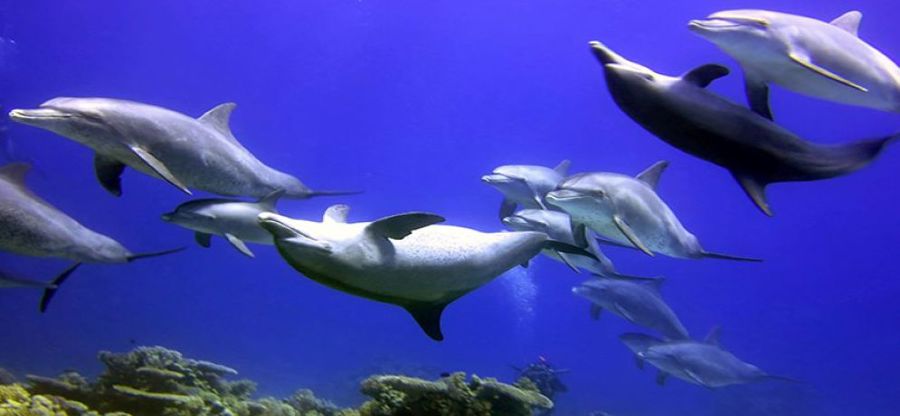
    The lagoon is famous for the resident bottlenose dolphins, which, if they are not disturbed and therefore move away, can be observed as they perform maneuvers worth seeing. The lagoon is protected in all weather conditions, not least because of the isolated coral formations at the southern tip that limit the wave action. The most suitable spot for diving is in the southwest, behind the coral reef.

  • Umm Gammar

    The island is surrounded by a wide coral reef reaching up to 2 km to the north, half rising out of the water. The way to Umm Gamar can sometimes be a bit rough due to the weather, but over the south plateau you will find enough shelter to moor. The typical dive of Umm Gamar takes place on the eastern side of the island. The zodiac drops you off at the desired spot and you drift south along the eastern wall until you reach 3 coral towers that mark the beginning of the south plateau. Two of the coral towers are hollow and filled with glassfish. The third has a large sandy cave at 27m. All three are covered with purple soft corals and a cloud of glassfish bustle in the hollows.

  • Carless Reef

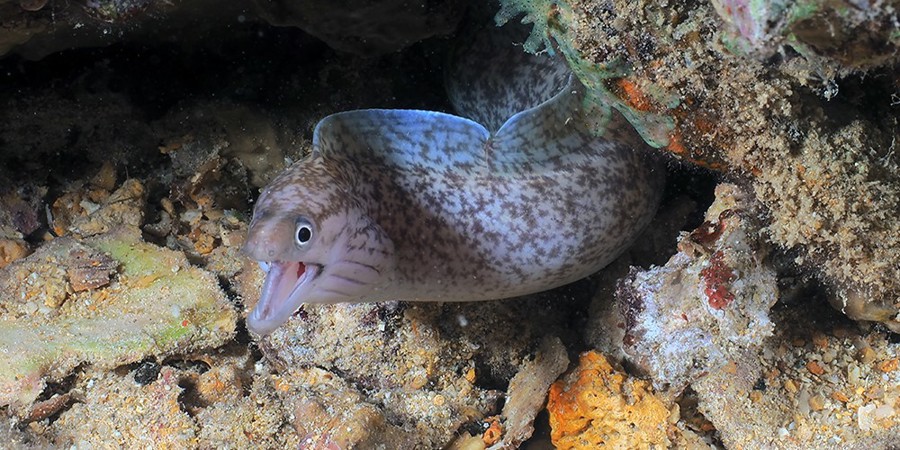
    The reef consists of two prominent pinnacles ( madrepores pinnacles) that stand on a plateau. The two pinnacles are easily visible thanks to the crystalline water in this little protected place. The dive is often not doable because of the lack of protection for the boats. The dive site is famous mainly because of the giant moray eels that live here and like to come out of their caves.

  • Abu Nuhas / Carnatic

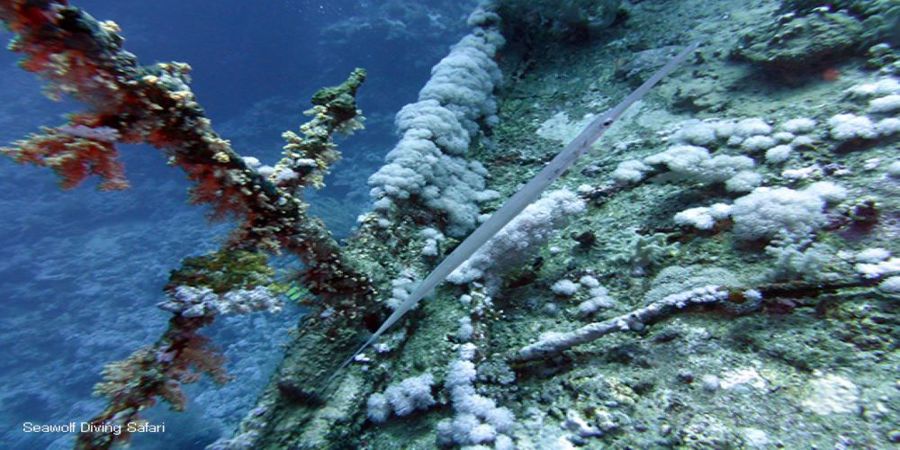
    The Carnatic, on a voyage from Liverpool to Bombay with 27 crew, 203 passengers, and a cargo of cotton, copper plates, and 40,000 pounds sterling in gold, ran aground on the reef Shab Abu Nuhas on the night of September 13, 1869. The ship initially remained on the reef, but broke apart and sank on September 15, despite various rescue attempts . Overconfidence in the ship's stability had a disastrous effect. Since the Carnatic had not been cleared and passengers and crew members were on board, the ship took 27 people down with it . The survivors first rescued themselves on Shadwan Island and were later recovered by the Sumatra. In October 1869, a helmet diver recovered most of the gold cargo as well as 700 copper plates. Several bodies were also discovered - one victim was still stuck in a porthole through which he had tried unsuccessfully to escape. 8,000 pounds sterling could still be in the wreck. No one has found them yet - perhaps they were secretly salvaged or disappeared under coral. The wreck was rediscovered in 1984 and has been a popular destination for Hurghada dive boats ever since. Since then, souvenir hunters have plundered it thoroughly. The Carnatic lies on its side at the base of the reef at a depth of 20 to 27 meters. In the middle the ship is badly damaged, bow and stern are well preserved. The wooden decks have rotted away so that it is safe to enter the interior. The hull is densely covered with stone and leather corals.

  • Abu Nuhas / Chrisoula

    After several previous owners, she finally changed to the shipping company Clarion Marine and was given the name Chrisoula K. Under this name she also made her last voyage, which took her to the area of the Abu Nuhas reef in the Red Sea on August 30, 1981 with a cargo of cheap Italian floor tiles. Due to a navigational error by the captain, the ship ran aground on the reef during the night of August 30 and sank. Today the wreck lies in an optimal position for divers at a depth between 5 meters and a maximum of 25 meters. The ship is in a slight inclination, the middle part is heavily damaged by the impact.

  • Abu Nuhas / Ghiannis

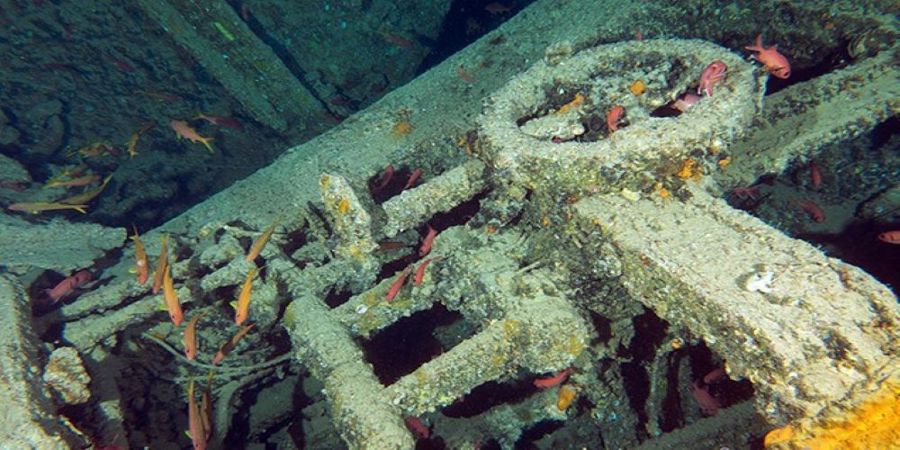
    For a long time the front half, which had run up on the reef, remained stationary and indicated the place of the accident, then it too sank and lay down on the port side. The aft half of the wreck lies somewhat inclined on the port side. Above the front of the quarterdeck rises the smokestack with the large letters "D". The "D" stands for the name of the shipping company: Danae. In front of the chimney is the bridge deck, behind it other spaces, a huge winch, the bollards, the intact railing, and even the frame that used to support a large awning was not damaged in the sinking. At the base of the funnel are narrow portholes leading into the engine room. The engines are an impressive sight with their long rows of cam arms, valves and pipes. The middle section of the ship resembles a junkyard, as iron girders are bent and torn, and the sides lie collapsed on the seabed. This area of the wreck is teeming with crocodile fish, scorpion fish and parrot fish. Some groupers have also made their home here.

  • Shaab Mahmud with Dunraven

    The interior of the lagoon is often visited by cruise ships, as it provides the necessary shelter for the night. Usually, the anchor is dropped on the sandy bottom inside the lagoon - near a narrow opening in the coral reef, the so-called Small Passage. This passage, which can be passed only by a dinghy, offers a great opportunity to see the beautiful coral reef outside the lagoon. Then a pleasant break inside the lagoon near the anchorage. During this dive hawksbill turtles can be encountered. In addition, you are sure to encounter mackerels and barracudas.

  • Dunraven

    Beacon Rock is a small reef that partially rises above the water surface, located 6.9 miles west of Ras Mohammed, and has a small lighthouse that marks the southernmost point of Sha'ab Mahmud. It was here that the English cargo ship Dunraven, which had mixed propulsion and had been built by the Mitchell & C. shipyard in 1873, sank in 1876 on its way to Bombay. The wreck, which lies inverted and separated into two parts at a depth of between 15 and 29.5 meters, was first discovered in 1977 by geologist Arye Keller and underwater cameraman Howard Rosenstein. The Dunraven was the subject of a memorable 1979 BBC documentary and subsequently became a classic dive site. Since the cargo consisting of wood and cotton bales was lost during the shipwreck and the ship caught fire, the wreck presents itself today as a large, almost empty cavern, into which one penetrates through three main openings on the stern, the middle section and the bow.

  • Ras Mohammed with Jolanda & Shark Reef

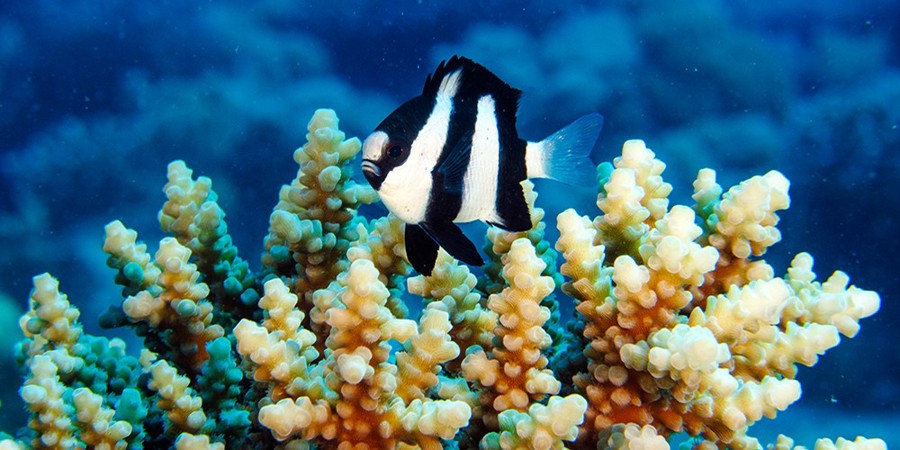
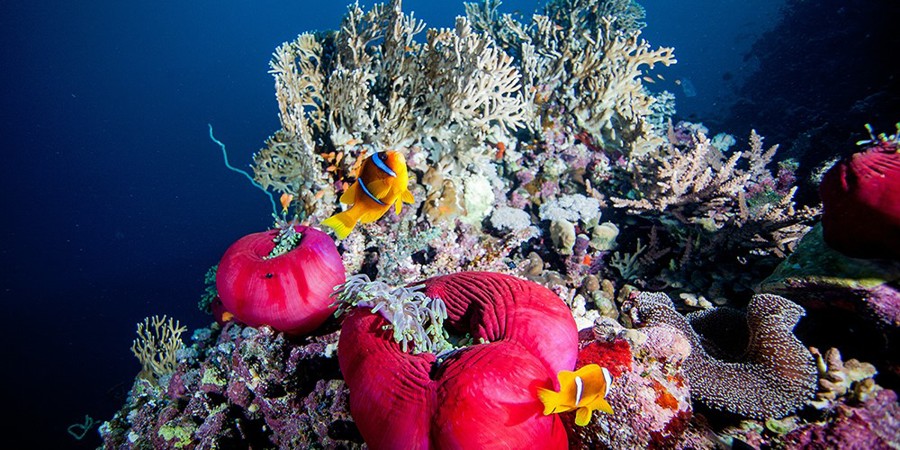
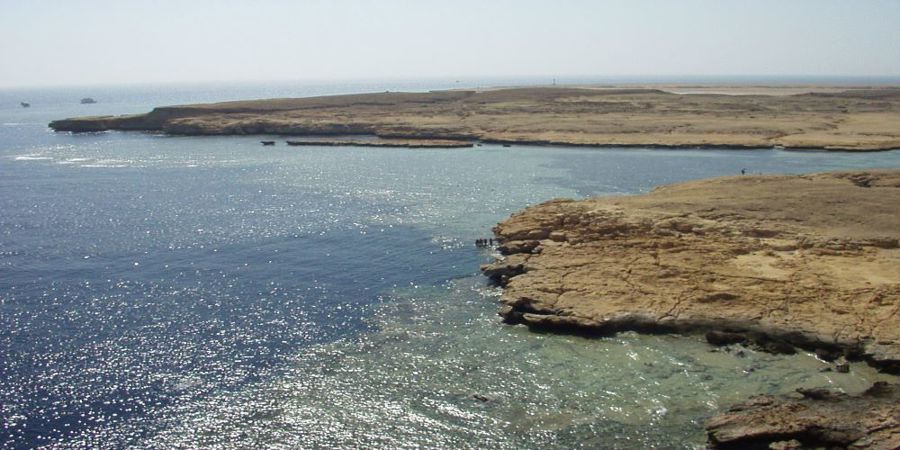
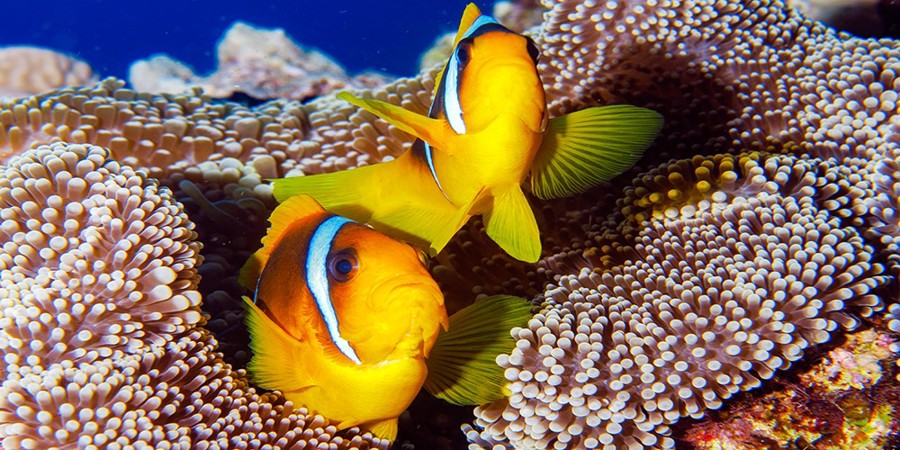
    The cape takes its name from its rocky peak to the east, whose contours are reminiscent of a male profile with a beard - the head of Mohammed - carved in stone. Ras Mohamed is one of the world's most famous dive sites and is located at the tip of Sinai. Two small reefs are connected by a vertical sloping wall.<br/>Close to Shark Reef, a little further north, is Anemone City, an vast, shallow reef zone with numerous sea anemones and their red sea anemone fish and three-spotted damsel fish. From Shark Reef, you can drift with the current along a steep wall that drops several 100 m to Jolanda Reef. The wall is completely covered with colourful corals. On the way to Jolanda Reef you reach a plateau with small boulders and coral islands. Once at the reef, you will see the scattered remains of the Yolanda wreck ,containerised sanitation facilities for the construction industry, now completely taken over by the life of the coral reef.

  • Jolanda

    Containers, toilets, bathtubs, wallpaper, boxes of whiskey and even a BMW 320 that belonged to the captain are spread all over the plateau. The ship, which partially rose above the water surface and was in an unstable position because the bow was vertically stuck in the bottom, was pushed by the waves to a depth of 50 meters in early 1987 and disappeared into the blue below during a violent sea storm on March 15 of the same year.

  • Numidia

    The Red Sea has a width of 180 km at the Brothers, yet the crew managed to hit this small island - shortly after two o'clock in the morning, Captain Craig was rudely awakened by the violent impact of the ship on the reef at the northern end of the "Big Brother". The "officer on watch", Merwood, had probably fallen asleep at the same time as his boss. The resulting course then led the ship in truly somnambulistic safety right into the middle of the reef. The ship was thus stuck in and on the narrow fringing reef and all efforts to free itself failed. In the following days, attempts were made to tow the Numidia free with the help of other ships, but this failed. Captain Craig was left with the thankless task of remaining on the desolate island for several more weeks to supervise the salvage of the cargo. Probably in the winter storms of 1901/02, the ship was then torn from the reef and it sank for good.

  • Aida

    The dive on the AIDA is an extraordinary dive, no matter how much experience you have as a diver. It leaves you wondering how a ship can sink like that and stand on the sloping reef edge, as if parked. Since the ship no longer contains any cargo, one suspects that this has slipped through the wreck and now lies in deeper regions on the ground. Same as, the AIDA stands bolt upright on the sloping reef edge, the highest point at 25 m, the screw at 57 m. Apart from the collision with the reef, the ship is still completely intact. It has been there for more than 40 years now and is becoming more and more part of the reef, overgrown with corals.

  • Shaab Sheer

    The north side of "Shaab Sheer" is a bit more turbulent, but the south side is like a lagoon and is usually very well protected. We have to reckon with the strongest current on the west side, which faces the "South Safaga Channel". Most divers appreciate the area between three and 15 metres depth because of the quasi "moonscape" of the brain coral garden, nevertheless we find many different reef inhabitants at "Shaab Sheer". Picasso triggerfish, orange-striped and yellow-fringed triggerfish, parrotfish, pencil filefish and sling jaw wrasses can be found here in masses. In the area of the northern plateau and at the steep wall we can also see bream, bigeye empereor, mackerel, red and black snapper as well as schools of tuna and barracuda.

  • Panorama Reef

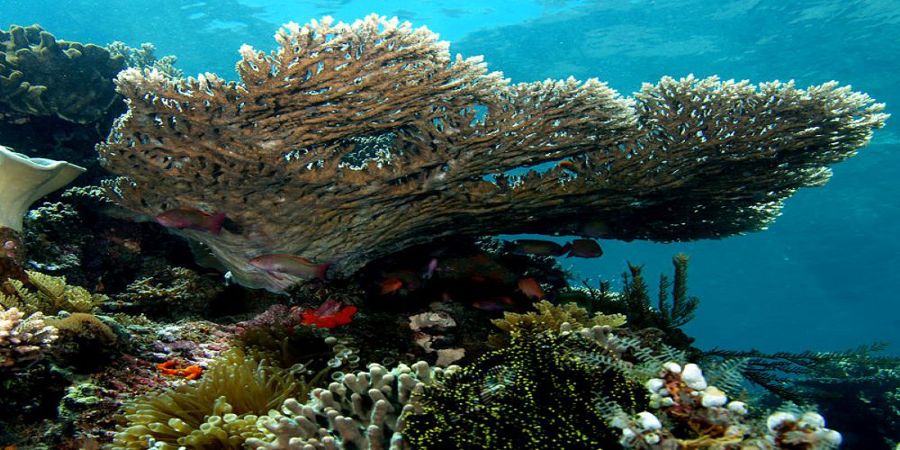
    The east and west sides of Panorama Reef drop off steeply, but to the north and south we find very interesting plateaus with lots of life and, how could it be otherwise, a panorama of a special kind. We see nose doctor fish, barracudas, fathead mackerels, moray eels, crocodile fish, eagle rays, napoleons and turtles. Great mountain corals, large table corals and thousands of anthias can be found on the northern plateau of Panorama Reef. The current is 95 per cent from the north, which means it's often quite "stormy" here. The southern plateau is more protected, starting at a depth of 18 metres and slowly dropping to 30 metres. Here, huge gorgonians grow above the chimney. A large anemone field is just as much a part of it as the almost obligatory sighting of stonefish.

  • Ras Abu Soma

    "Ras", meaning the "head" of Abu Soma, is a drop off wall that descends into the depths at this reef at the northern end of Safaga Bay. At a depth of about 25 meters we find a plateau with many different corals, mainly table and hard corals. In the blue water the chances of seeing barracudas, mackerels, snappers, tunas and bat- and surgeon fish are good. From time to time at "Ras Abu Soma" even grey reef sharks or whitetip reef sharks are sighted as well as leopard or hammerhead sharks, stingrays, guitarfish or eagle rays and in spring also manta rays. On the plateau, however, we always find interesting reef inhabitants, such as moray eels, octopuses or cuttlefish on the reef slope and clownfish in their anemones. Further south is "Ras Abu Soma Garden", a great coral garden that turtles and milkfish also love.

  • Small Giftun Island

    On this drift dive you jump into the water in the open sea, approximately in the middle of the south coast of the smaller of the two military islands Giftun and Seghir. The feeling of being driven by the current into the blue water is unique and even more exciting can be the encounter with huge but tame Napoleon fish. They suddenly appear as large shadows in the blue water and curiously approach the divers. This unforgettable glide is aimed at the vertical wall of Giftun Island, which slopes down to the bottom at a depth of 90 meters, but can confidently be explored at much shallower depths. Just as beautiful, however, is the dive made along the wall at shallower depths. This side of Giftun Island is called Gorgonian Reef, which testifies to the abundant growth of horn or sea fan corals. The dive ends in the lagoon in the south of the island, where the moored boat is located. Here you can often meet huge moray eels, which are close to the numerous divers. The variety of stony corals, fire corals and various other hard corals make the final part of this dive extremely interesting.

Golden Dolphin Safari World

English Deutsch 中文(简体)
up