South Safari until Dolphin Reef
  • Marsa Shuona

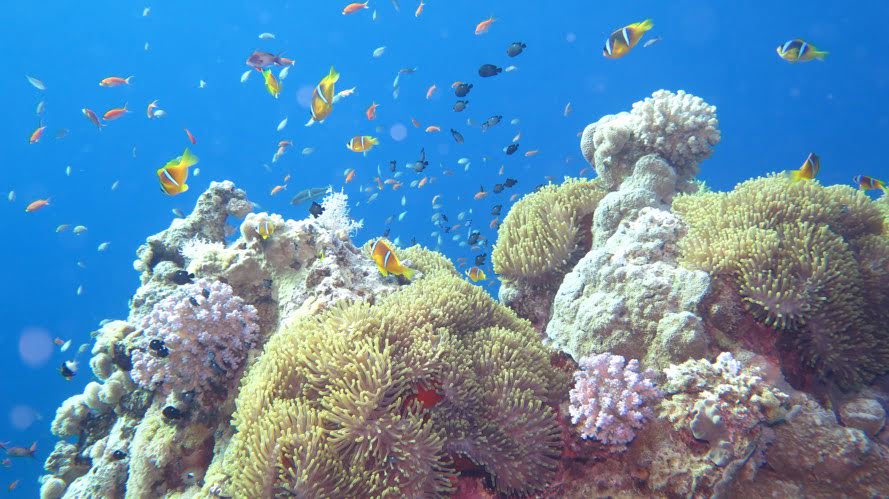
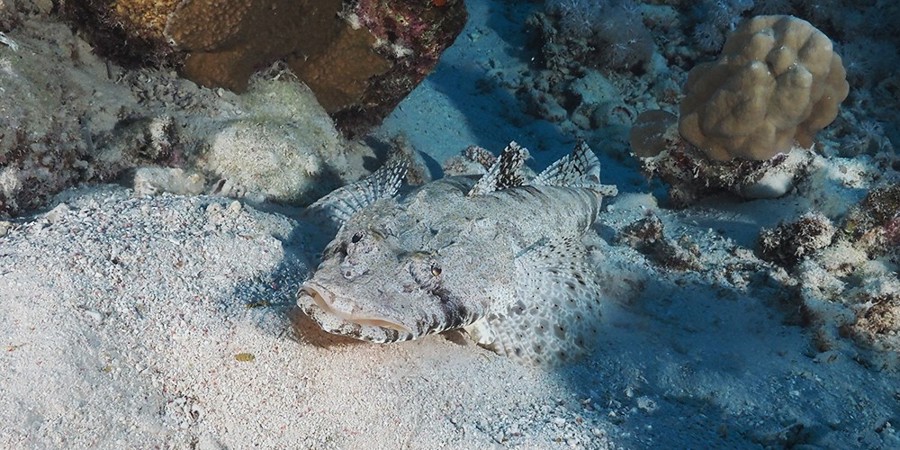
    The corner and outside north of Shouna is unique for its sprawling sand plateau. Littered in table corals of all shapes and sizes pick your depth on the gradual slope and see what's hiding beneath each one. Of course blue spot rays are abundant but certain times of year bring in breeding guitar rays and other surprises.

  • Abu Galawa Soraya

    A sailing yacht from the USA sank at "Abu Galawa Soraya" in 1980 and has since been colonized by very many soft and hard corals. An incredible sight in 17 meters depth on a length of 15 meters. But not only the great overgrown wreck convinces here. Needlefish, blue spotted stingrays, red sea fusiliers and free swimming giant moray eels can be spotted and admired at this dive spot with a little luck. What will please many - "Abu Galawa Soraya" is also suitable for a night dive and what better way to see the various wreck dwellers than at night! Equipped with light we can see inside the wreck also during the day the many glass fish that have made the yacht their own for a long time. Also on the sandy bottom many surprises are waiting between the coral towers and blocks.

  • Shaab Marsa Alam

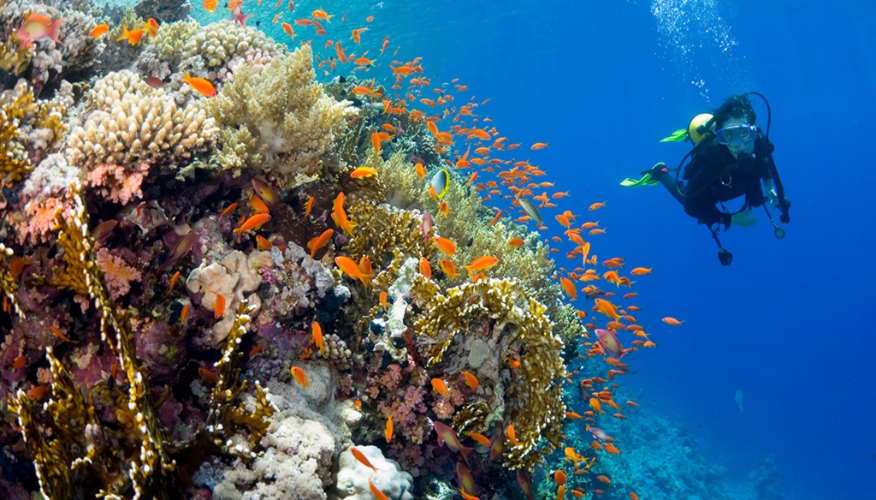
    Shaab Marsa Alam is a large semi-circular reef shaped like a bean. It is surrounded by sandy bottom with isolated rock and reef formations. The north-eastern part is particularly impressive, with a unique and, above all, species-rich coral garden. It is not uncommon to see reef sharks here. If there is a current and with a bit of luck you can also see small black tip sharks or Longimanus. To the south, in the lagoon, there is a small Wreck at around 17 m depth.

  • Abu Dabbab

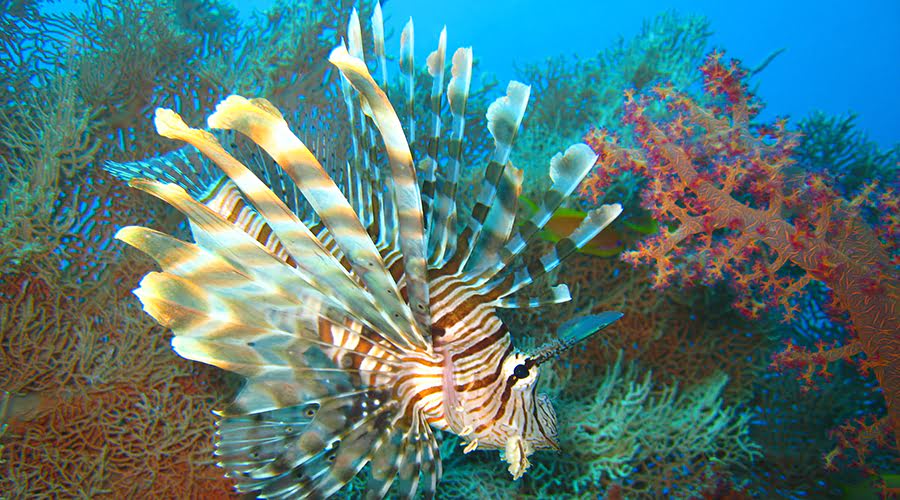
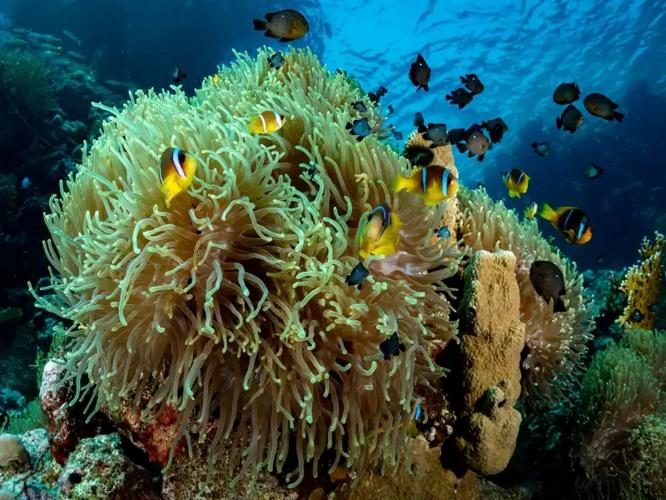
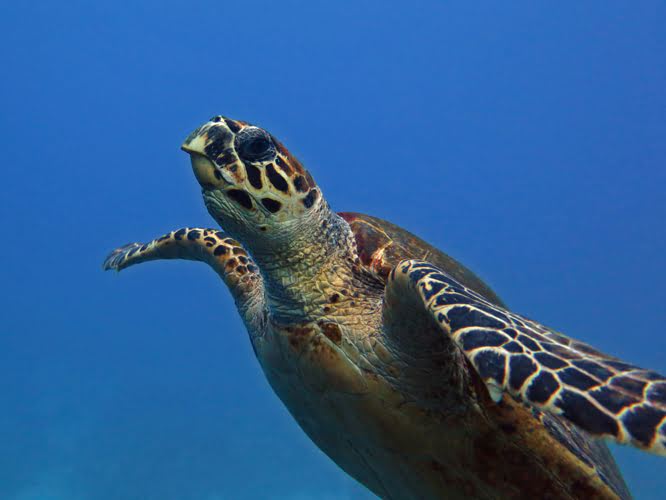
    A unique structure makes this reef so remarkable: there are notches and small caves, also a stunning coral garden. All kinds of emperor and banner fish are at home here, but also reef sharks. Due to its location and its maximum depth of 16m, Abu Dabab I is excellent for relaxed day and exciting night dives. In the south, almost exactly in the middle, there is a single block. There you will see bright red lionfish, as well as feather stars and at night basket stars. In addition, dolphins keep passing by in the south. In the southeast there is another collection of ergs with soft and hard corals, around which there are occasional hawksbill turtles and sharks. To the north is the famous "Heaven one". Many stories are told around this wreck. Not far away you will find anemone colonies and a cave system overgrown with ancient corals, before diving into two lagoons on the west side with mighty corals and schools of barbels and snappers. On the west side, an ancient coral formation stretches south with some boulders where reef sharks like to sleep. At the edge of the reef you can find remains of amphorae.

  • Fury Shoals

    The Fury Shoals make up several reefs along the Southwest Red Sea coast, offering amazing scuba diving opportunities with some of the most pristine reefs in Egypt. The hard and soft coral are unspoiled and are a highlight of many dive sites such as the Fury Shoal Garden. The marine life is also really great with all the usual reef fishes of the Red Sea and various species of reef Sharks (Whitetip, Grey) and even sometimes the curious Oceanic Whitetip Shark. Pelagic fishes such Barracudas, Giant Trevallies, Dogtooth Tunas are also common in the area.

  • Shaab Maksur

    It is 350 to 400m long and has three plateaus, one of them - untypical for an outer reef - on the west side. The currents are similar to Elphinstone, as both reefs have almost exactly the same orientation. The south plateau actually consists of two levels. The first ranges from 18 to 35m, the second from 35 to 42m. Both have a length of 50 to 60m and a width of 40m. At the end, the reef descends steeply to 80m, then continues into a slope to 120m before disappearing fully into the depths. The west side has something special, because bordered by a coral garden and a block at the end there is a small lagoon in the middle of the plateau, which is very nicely embedded with a depth of 13-16m and a width of 20m. Here lie some pieces from an old safari boat that hit the reef after 14 days in service. The riggings were thrown overboard and the hull was taken to the shipyard for reconstruction. Meanwhile the reef has grown very nicely around the wreckage. The eastern area is a drop off and to the north there is another plateau at a depth of 20 to 37 meters where there are smaller mounds and a coral garden. Here, as everywhere on this reef, downward currents can occur. At the northernmost point there are two more rocky pinnacles separated from the reef by an 8m deep gap.

  • Satayah Gota Soraya

    "Soraya" means "small". This tells us that we are on the sister reef of the larger Sataya Gota Kebir. The water depth in the area to be dived is 20 to 25 meters. The reef has a length of 250m and a width of about 70m. The boat usually moors in a small lagoon in the southeast of the reef. However, depending on the current, there is also the possibility to moor the boat in the southwest at a notch of the reef. The Sataya area almost always has current from the north. The mooring in the southeast, in the lagoon, is also one of the most beautiful places to dive in the midday. Very few people dive here and you get the impression that you are entering the water shortly after the coral garden is formed. The most common diving tours, due to the current from the north, start with the Zodiac of course in the north. Then one has the free choice whether one dives left or right hand side. Here you can practice navigation and you have a dive of about 60 to 70 minutes in each direction. There is also a small path in the north through a cave into a lagoon. This is covered with mountain corals. The whole area is full of huge mountain corals, large table corals, leather corals and soft corals. There are a lot of juvenile fish, large schools of snappers, bigeyes and barbels. You can also find snails, as well as dolphins and young reef sharks. There is another coral garden in the northwestern area, behind a sandy road. It consists of old and new coral formations and slopes down to 40m in the north.

  • Satayah Gota Kebir

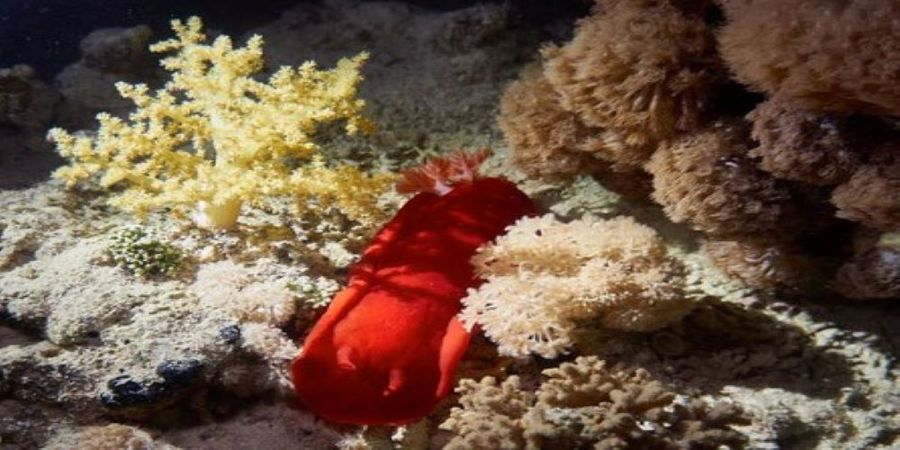
    Sataya Gota Kebir - "Kebir" means "big" - is located west of the main Sataya reef. The water depth in the area that is dived is from 5 to 25m. The reef is about 140m long and has a width of about 80m. The mooring is well protected, usually right by a plateau with a depth of 5 to 15m. Since the current, except in autumn, actually always comes from the north, it is an ideal day and night mooring place - perfect for exploring the plateau in the dark. To the south, the plateau is at 5-11m, dropping to 15-18m on the outer sides. At night it is teeming with life. There is almost a guarantee of Spanish dancers, this is what this place is known for. You can also find many kinds of shrimps, rabbits fish, parrot fish in cocoon, flute fish, lion fish, gorgon heads and many more. In the west you will find some bigger blocks at 22m. Except in the northwestern area there are actually small and big blocks everywhere. You will find among others flatworms, moray eels, small groups of hunting fish as well as slugs. In the north there is a lagoon with a beautiful coral garden, swarm fish and an anemone colony.

Golden Dolphin Safari World

English Deutsch 中文(简体)
up